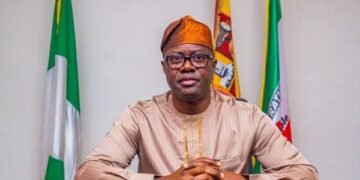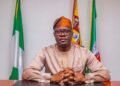




President Bola Tinubu has ruled out a return to Nigeria’s petrol subsidy regime, warning Nigerians against abandoning his administration’s economic reforms as the country enters what he described as an “age of prosperity”.
Tinubu spoke in his Independence Day address on Thursday, October 1, 2026, as Nigeria marked its 66th anniversary.
The President used the nationwide broadcast to defend the removal of petrol subsidy and other economic reforms introduced since he assumed office in 2023.



Tinubu acknowledged that the reforms had been difficult and that their “side effsubsidyects were real”, but argued that reversing them would amount to returning to policies that failed to address Nigeria’s underlying economic problems.
“Our reforms did not create the weaknesses in our economy. They confronted them,” Tinubu said.
He specifically warned against proposals to restore petrol subsidies, describing them as an attempt to abandon the economic “treatment” Nigeria had undergone.
“Now, as certain influential but regressive voices would have us abandon the treatment and return ourselves to the abuse of addictive subsidies, we must resist their siren song,” he said.

The warning comes amid an increasingly prominent fuel-subsidy debate ahead of the 2027 presidential election.
Former Vice-President and African Democratic Congress presidential candidate, Atiku Abubakar, has pledged to restore petrol subsidy if elected.
Atiku said in August that his position had not changed and later described his proposal as a targeted intervention intended to reduce transportation and living costs.
The policy dispute has become a major point of disagreement between the ruling All Progressives Congress and Atiku’s camp, with the APC questioning the proposed subsidy’s legal framework, cost and funding.
Tinubu defended his position using a medical analogy, comparing Nigeria’s pre-reform economy to a cancer patient who had to choose between painful treatment and temporary relief.
“Nigeria was like a sick patient who receives the terrible news that he has cancer,” he said, arguing that previous governments had focused on easing symptoms while allowing structural problems to deepen.
“For too long, Nigeria’s leaders chose morphine while praying for a miracle that never came,” he said.
Tinubu said the economic outlook had improved since the reforms, citing growth of more than four per cent in 2026, lower inflation, increased foreign reserves, greater foreign-exchange stability and reduced oil theft.
Recent GDP data show Nigeria’s real economy expanded by 4.43 per cent year-on-year in the second quarter of 2026, compared with 3.89 per cent in the first quarter.
The President also cited Nigeria’s record non-oil export performance in 2025. Non-oil exports generated $6.1 billion during the year, according to the Nigerian Export Promotion Council.
Tinubu said the next stage of his administration would focus on turning economic improvements into tangible benefits for households.
“The emergency treatment is over. The foundation has been repaired,” he said. “Now, our purpose is simple: shared and widespread prosperity.”
He listed lower production and transportation costs, agricultural mechanisation, irrigation, better access to fertiliser, improved storage and infrastructure as measures intended to bring down the cost of living.
The President also promised greater emphasis on jobs, enterprise and industrial growth, including the use of domestic gas to power industries, factory revival, digital connectivity and skills development.
But he acknowledged that millions of Nigerians were still struggling with food, education, healthcare and transportation costs.
Tinubu said programmes such as the Nigerian Education Loan Fund, CREDICORP and targeted support for poorer households were intended to provide a bridge while broader economic opportunities expanded.
“These programmes are not substitutes for prosperity. They are a bridge,” he said.
The President ended the address by declaring that “the age of reform has done its work” and that Nigeria had entered an “age of prosperity”, while urging Nigerians not to look back.
The speech places the fuel-subsidy question at the centre of the administration’s argument that its economic reforms should be maintained, even as opposition parties continue to present alternative approaches to the cost-of-living crisis ahead of 2027.