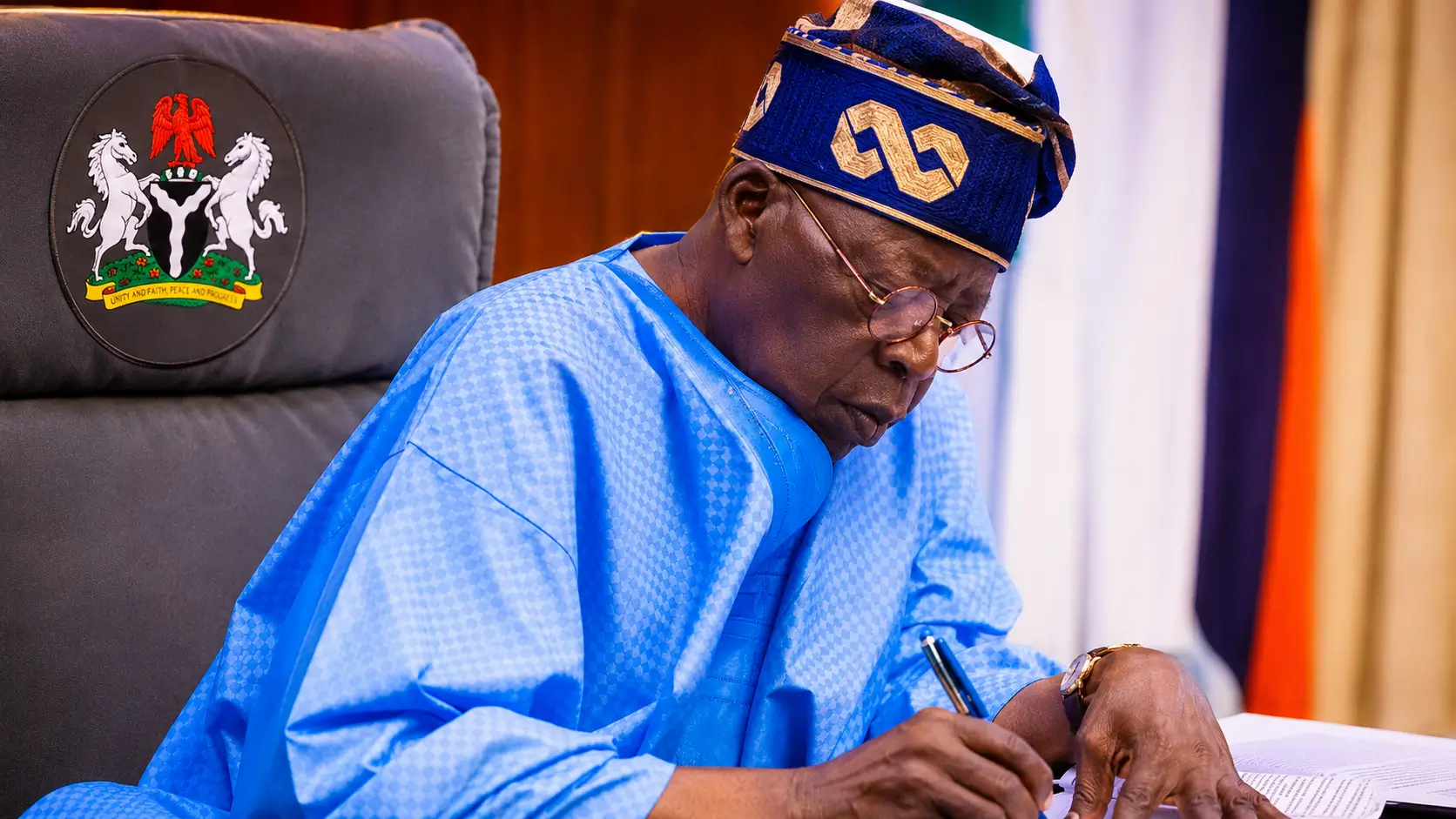
Nigeria moved a significant step closer to establishing state police services on Tuesday after President Bola Tinubu formally transmitted the proposed State Police Bill to the National Assembly, setting the stage for what lawmakers describe as one of the most consequential constitutional reforms since the return to democratic rule.
The proposal, which seeks to amend the 1999 Constitution and create a dual policing framework comprising federal and state police formations, is expected to come up for debate and voting in the Senate following renewed pressure from governors, security experts and community leaders seeking a more decentralized approach to tackling insecurity.
The bill was formally read on the floor of the Senate by Senate President Godswill Akpabio, who immediately referred it to the Senate Committee on Constitution Review for accelerated consideration.




Akpabio urged senators to ensure full attendance during deliberations, describing the proposed legislation as a historic opportunity to transform Nigeria’s security architecture.
“Since 1960, Nigeria has not had the courage to decentralise policing, and this is the first time,” Akpabio said.
According to him, the proposed amendment would bring policing closer to local communities, improve intelligence gathering and strengthen grassroots participation in security management.
President Tinubu described the proposal as a critical pillar of his administration’s efforts to reorganise the country’s security structure amid persistent challenges posed by terrorism, kidnapping, banditry and violent crimes.
The push for state police has gained momentum in recent years as governors increasingly demand greater authority over security operations within their states.
Although governors are constitutionally recognised as chief security officers of their states, operational control of the Nigeria Police Force remains vested in the Federal Government.
At a strategic meeting convened by the Nigeria Governors’ Forum Secretariat last week, governors, attorneys-general, legal experts and security officials reviewed proposals on funding structures, oversight mechanisms and operational responsibilities for state police services.

One major concern raised during the consultations relates to sustainable funding.
Some stakeholders argue that the proposed allocation of three per cent of Federation Account revenues may be insufficient to fund personnel, equipment, logistics and operational requirements across all 36 states.
Security experts remain divided on the extent of powers governors should wield under the new arrangement.
Retired Brigadier-General Peter Aro argued that state police should be empowered to conduct intelligence gathering, investigations and internal security operations while operating within clearly defined constitutional limits.
Similarly, retired Assistant Inspector-General of Police Ali Amodu said governors should naturally exercise significant influence because states would bear responsibility for funding and maintaining their police services.
However, retired AIG Wilson Inalegwu warned against granting excessive powers without adequate safeguards.
Supporters of the proposal argue that decentralised policing would improve response times, deepen community trust and enable security agencies to leverage local intelligence more effectively.
Deputy Speaker Benjamin Kalu recently described the legislation as a “legacy initiative” of President Tinubu, arguing that Nigeria’s current centralised policing model is increasingly inadequate for a nation of more than 230 million people.
The House of Representatives had earlier approved constitutional amendment proposals supporting state police as part of broader security reforms.
For the amendment to become law, it must secure the support of at least two-thirds of members of both chambers of the National Assembly and subsequently gain approval from no fewer than 24 state Houses of Assembly before presidential assent.
The Senate’s planned debate was briefly delayed following the announcement of the death of House of Representatives member Yaya Tongo of Gombe State, prompting lawmakers to suspend proceedings and observe a minute of silence in his honour.
Despite the temporary setback, momentum behind the State Police Bill remains strong, with lawmakers, governors and security stakeholders increasingly viewing decentralised policing as a critical response to Nigeria’s evolving security challenges.