
Former Nigeria Football Federation president Amaju Pinnick has offered fresh details on the circumstances surrounding Adidas’ departure from Nigerian football and Puma’s alleged refusal to do business with the country, claiming actions by some Nigerians damaged the relationships.
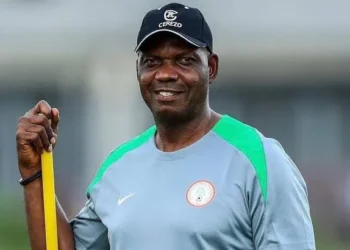
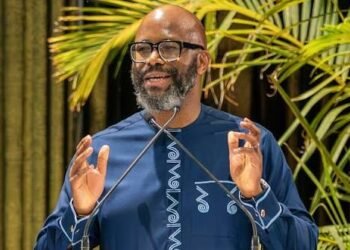
Pinnick made the disclosure in the latest episode of The Pinnick Tapes (Remastered): NFF Scandals EXposed, hosted by former Super Eagles coach Sunday Oliseh.
Pinnick, who became NFF president in 2014, said Adidas informed the federation that it intended to leave shortly after he assumed office.
“I was utterly flabbergasted when I got the letter from Adidas,” he said, recalling how he travelled to Zurich to meet the company’s president in an attempt to save the relationship.
He said his intervention failed, although he later learned that there were other issues behind Adidas’ decision that he was unwilling to disclose publicly.
Pinnick said the sponsorship difficulties were not limited to Adidas.
He claimed that Globacom, General Insurance and Guinness were also leaving or had indicated their intention to end their relationships with Nigerian football around the time he took over.
The former NFF chief then recounted his attempt to establish a relationship with Puma.
According to Pinnick, he met the sportswear company’s top executive during the 2015 Africa Cup of Nations in Equatorial Guinea, but the executive was initially reluctant to engage with him after learning that he was Nigerian.
Pinnick said the executive subsequently told him about an alleged incident involving three Nigerians who had visited his home on Christmas Day.
According to the account, the men allegedly proposed abandoning an existing Adidas contract in exchange for certain demands.
Pinnick said the incident had left the Puma executive unwilling to have further dealings with Nigeria.
“And from there on, he made up his mind never ever to have anything to do with Nigeria. He blacklisted Nigeria,” Pinnick quoted the executive as telling him.
Pinnick did not name the three Nigerians or disclose the demands they allegedly made.
Despite the setback, he said he resolved to secure another major sportswear partner for the national teams.
His efforts eventually produced a deal with Nike, which became the NFF’s technical sponsor in April 2015.
The partnership provided kits, training apparel and equipment for Nigeria’s national teams and marked the end of Adidas’ period as the federation’s technical partner.
Nike and the NFF later signed an improved partnership agreement in 2018, extending their relationship towards the 2026 World Cup.
Pinnick also rejected suggestions that his administration presided over a sponsorship collapse.
“When I was president of NFF, no sponsors left me. I brought in sponsors. I went from zero to almost 80% of self-funding,” he said.
He added that the figures could be verified through the federation’s audited accounts prepared by PricewaterhouseCoopers.
The former NFF president maintained that the commercial difficulties predated his administration and that his board responded by aggressively pursuing new partnerships.
His latest comments form part of a wider conversation about the state of Nigerian football, with the interview also touching on the country’s failure to qualify for the 2022 and 2026 World Cups, unpaid coaches and players, political interference and other structural challenges.
For Pinnick, the sponsorship battle was also part of a broader attempt to reduce the NFF’s dependence on government funding and build a stronger commercial base for Nigerian football.
His account of the Puma episode, however, remains an allegation based on a conversation he said he had with the company’s executive. The identities of the three Nigerians and the details of their alleged demands remain undisclosed.