


Two members of the Delta State House of Assembly have challenged the Independent National Electoral Commission (INEC) over its ward delineation arrangement in Warri South Local Government Area, warning that unresolved discrepancies could complicate preparations for the 2027 elections.
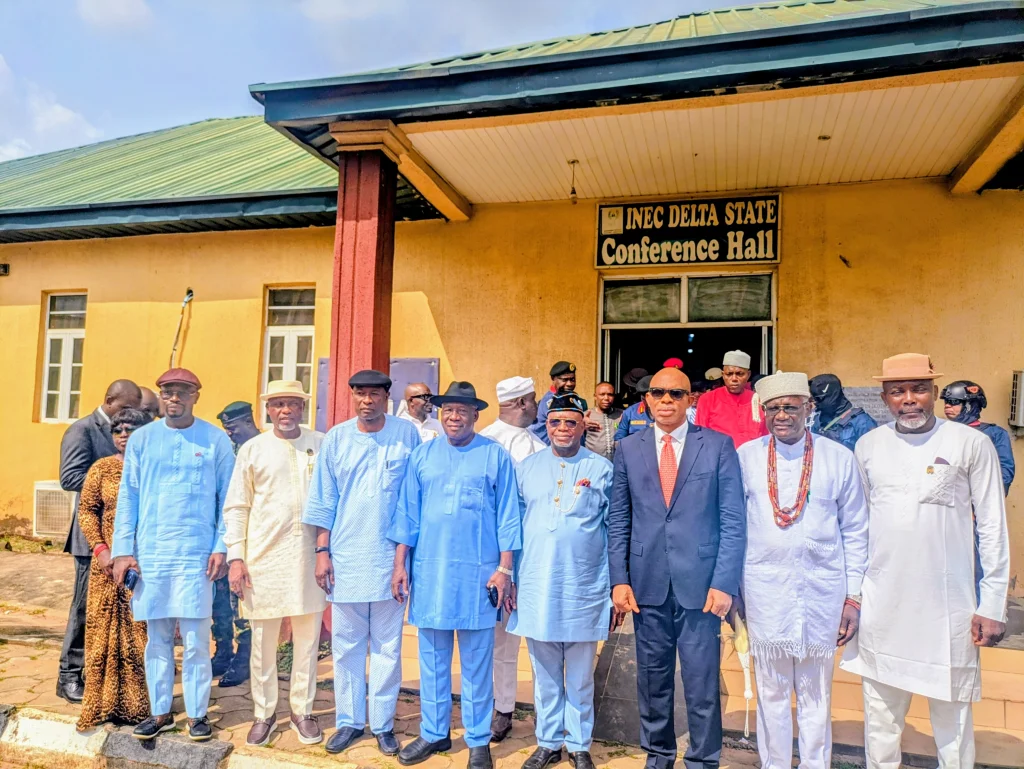
The lawmakers, Austin Uroye, representing Warri South Constituency I, and Benson Obire, representing Constituency II, raised the concerns on Wednesday during an INEC stakeholders’ engagement in Asaba.
They alleged that changes reflected on the commission’s electoral portal had affected the distribution of wards between the two constituencies, creating confusion over polling units and electoral records.
READ ALSO



Uroye questioned how political parties and candidates could effectively prepare for the elections if existing polling unit coordinates and electoral information no longer aligned with the arrangement displayed on INEC’s portal.
He argued that stakeholders should have been adequately consulted before changes to the electoral structure were implemented, warning that affected parties could seek legal redress if the concerns were not resolved.
Obire supported the call for an urgent review, saying political parties had conducted their primaries under the previous ward arrangement and their candidates had been screened, cleared and issued certificates before the latest concerns emerged.
He appealed to the Delta Resident Electoral Commissioner, Sir Etekamba Udo Umoren, to communicate the lawmakers’ concerns to INEC’s national headquarters.
The dispute follows INEC’s May 2026 announcement of a fresh delineation arrangement for Warri Federal Constituency, under which Warri South was assigned 20 electoral wards, compared with the previous 12. The exercise also affected Warri North and Warri South-West. The commission said the exercise followed a Supreme Court directive and was intended to address longstanding demands for improved political representation.

The lawmakers’ objections come amid wider disagreements over the delineation exercise. On Wednesday, residents and community representatives also protested at INEC’s Delta office in Asaba, demanding a review of the electoral arrangement.
Addressing the stakeholders, Umoren warned political parties, candidates and supporters against violence, vote-buying, intimidation and the circulation of fabricated election results.
He said political ambition should not come at the expense of human lives, public peace and property, urging parties to discourage supporters from announcing unofficial results or spreading unverified allegations against electoral officials and security agencies.
The REC disclosed that Delta had 3,525,988 registered voters, according to figures presented by INEC Chairman, Professor Joash Amupitan, in October.
He said the commission was strengthening logistics, staff training, technology deployment, security coordination and voter education ahead of the elections.
Umoren also said the three phases of the Continuous Voter Registration exercise conducted between August 2025 and July 2026 had been concluded, subject to applicable verification processes.
He urged eligible voters to collect their Permanent Voter Cards and participate in the scrutiny of the voters’ register, warning that multiple registration, impersonation and unlawful possession of more than one voter’s card were offences.
On technology, he said INEC would continue strengthening the deployment of the Bimodal Voter Accreditation System and the INEC Result Viewing Portal, while acknowledging that technology alone could not guarantee credible elections without adequate infrastructure and trained personnel.
The REC also raised concerns about artificial intelligence-generated photographs, manipulated audio recordings and misleading videos, urging journalists to verify election-related information before publication.
He called on security agencies, political parties, civil society organisations, traditional rulers and religious leaders to support peaceful participation, particularly in riverine communities where logistical challenges require early planning.
Delta Commissioner of Police, Samuel Etaifo Erale, assured residents that security agencies would work together to protect voters and electoral materials, warning that offenders would be dealt with irrespective of political affiliation.
Governor Sheriff Oborevwori, represented by his Senior Political Adviser, Emmanuel Aguariavwodo, pledged the state government’s support for peaceful and credible elections.
Religious and traditional leaders at the meeting also urged politicians to avoid violence and accept electoral outcomes peacefully.
The stakeholders’ engagement was organised to strengthen cooperation among INEC, political parties, security agencies, the media and other groups ahead of the 2027 general elections.