


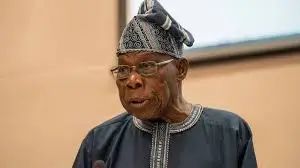
Former President Olusegun Obasanjo has disclosed that former Head of State, Gen. Abdulsalami Abubakar (retd.), was actively pursuing the release of the late Chief MKO Abiola before the acclaimed winner of the June 12, 1993 presidential election died in detention.
Obasanjo made the revelation on Saturday in Abuja during the public presentation of three books in honour of Abdulsalami’s 84th birthday, an event attended by President Bola Tinubu, former presidents, senior government officials and other prominent Nigerians.
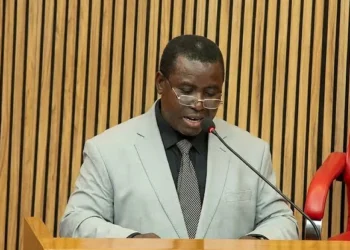
Speaking at the event themed “The Legacy of a Statesman @84,” Obasanjo recalled private conversations he had with Abdulsalami in the weeks following the death of former military ruler Gen. Sani Abacha in June 1998.


According to him, Abdulsalami had made the release of political detainees a priority and was working behind the scenes to resolve the political crisis created by the annulment of the June 12 election.
“Your next move was how to get MKO Abiola released and you kept me regularly informed, and also related messages to the family,” Obasanjo said.
He added that Abiola’s son, Kola, had already arrived in Abuja in anticipation of his father’s release.
“Kola was already in Abuja to pick up his father when the unexpected happened. I remember you telling me on the telephone, ‘our man is dead,’” Obasanjo stated.
Abiola, widely regarded as the winner of the June 12, 1993 presidential election, had been detained since 1994 after declaring himself president following the annulment of the poll by the military regime. He died in custody on July 7, 1998, barely a month after Abdulsalami assumed power following Abacha’s death.
Obasanjo praised Abdulsalami’s leadership during one of the most turbulent periods in Nigeria’s political history, saying the former Head of State successfully managed the uncertainty that followed Abacha’s sudden death.
“You sagaciously managed the seeming confusion and uncertainty that followed Abacha’s death. You emerged from the cloud and carefully proceeded to untangle the nation. Political prisoners were released, and I was,” he said.
The former president also credited Abdulsalami with laying the foundation for Nigeria’s current democratic dispensation.
“Within less than one year of your taking office, we had democracy restored,” Obasanjo noted.
Former President Goodluck Jonathan, who also spoke at the event, described Abdulsalami as a statesman whose commitment to peace and democratic governance helped stabilise the country during a delicate transition period.
Jonathan commended the retired general for resisting the temptation to remain in office and instead overseeing a swift return to civilian rule, describing the decision as one of the defining acts of his public service.

Saturday’s ceremony also featured the unveiling of the proposed Abdulsalami Abubakar African Resource Centre, with President Tinubu directing the Minister of the Federal Capital Territory to allocate land for the project along the Airport Road corridor in Abuja.
Three books were presented at the event, including Abdulsalami’s autobiography, Call of Duty, which revisits key moments in Nigeria’s political history, including the June 12 crisis, the deaths of Abacha and Abiola, and the transition that eventually culminated in the handover of power to Obasanjo on May 29, 1999.
For many Nigerians, Obasanjo’s latest account offers a fresh perspective on the final days of Abiola, whose detention and death remain among the most debated chapters in the country’s democratic journey.