



Eleven members of Iran’s World Cup delegation remain unable to enter the United States after visa appeals secured entry clearance for four others, adding a fresh layer of uncertainty to preparations for the 2026 FIFA World Cup.
The latest development comes as Iran’s national team prepares for the tournament amid heightened tensions between Washington and Tehran, with concerns extending beyond football to wider diplomatic and security considerations.
According to reports, 15 members of the Iran Football Federation delegation were initially denied US visas. Following appeals and renewed applications, four officials have now secured approval, while 11 remain barred from travelling to the United States.



Those granted entry reportedly include a technical analyst and officials attached to the federation’s international operations. However, several senior figures remain affected by the restrictions.

Among those denied visas are Iran Football Federation president Mehdi Taj, a federation vice-president, two team administrators, a media officer and a security officer. Another media official reportedly did not submit a fresh application after the initial refusal.
The issue has emerged just days before the start of Iran’s World Cup campaign, creating logistical challenges for a delegation responsible for media coordination, administration, security and tournament operations.
US authorities have maintained that players are eligible to participate in the tournament but have indicated that officials with alleged links to sanctioned organisations could face additional scrutiny.
US Secretary of State Marco Rubio previously stated that athletes competing at the World Cup would be allowed entry, while visa decisions involving non-playing officials would be reviewed individually under existing immigration and national security regulations.
The controversy reflects the increasingly complex relationship between international sport and geopolitics as the United States prepares to host the biggest football tournament in history alongside Canada and Mexico.
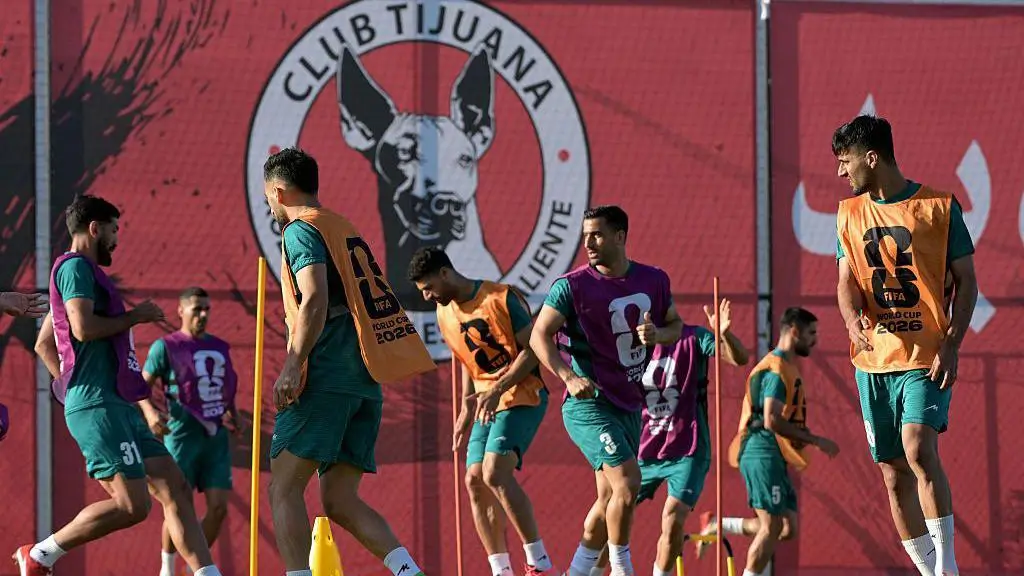
Iran has already shifted its primary tournament base to Mexico, a move viewed by analysts as both a logistical and diplomatic precaution amid concerns surrounding travel restrictions and political tensions.
The Iranian side is scheduled to begin its World Cup campaign against New Zealand in Los Angeles on June 15 before facing Belgium on June 21 and Egypt on June 26.
The visa dispute has also reignited debate about the responsibilities of World Cup host nations.
Critics argue that countries hosting major international sporting events should guarantee access to all accredited participants regardless of political disputes. Former FIFA president Sepp Blatter has publicly questioned the situation, saying tournament hosts should ensure unrestricted entry for players, officials and accredited personnel.
FIFA has acknowledged concerns surrounding visa processing and access issues but has stressed that immigration decisions ultimately rest with national governments. The governing body says it remains in contact with affected federations and is working to minimise disruptions ahead of the competition.
The issue is not limited to Iran. Reports indicate that officials, referees and support staff from several countries have encountered visa-related difficulties ahead of the tournament, prompting broader concerns about equal access and tournament logistics.
For Iran, however, the matter carries added political significance given decades of strained relations with the United States. While the team’s participation on the field appears secure, uncertainty surrounding key federation officials continues to cast a shadow over preparations.
With the World Cup only days away, diplomatic efforts and legal appeals are expected to continue as affected officials seek to reverse the remaining visa denials.