


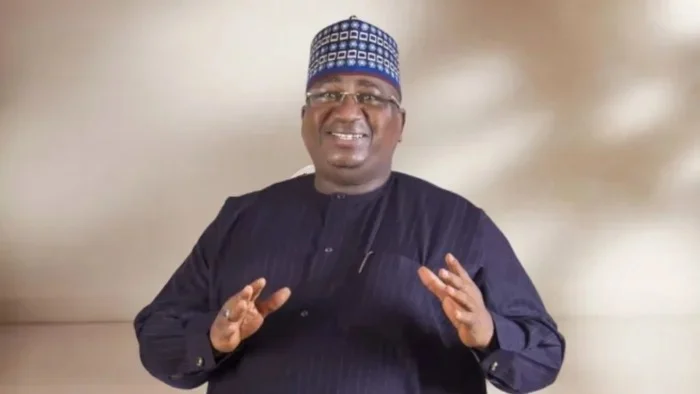
Kebbi State Governor, Nasir Idris, has reaffirmed his administration’s commitment to sustaining the state’s annual free mass wedding programme, declaring that the initiative will remain a key social welfare intervention throughout his tenure.
The governor of Kebbi State made the pledge on Monday during the 2026 edition of the mass wedding ceremony, where 300 couples were joined in marriage under Islamic rites at the Haliru Abdu Stadium in Birnin Kebbi.
Addressing thousands of guests, Idris described the programme as one of the state’s flagship social intervention schemes designed to ease the financial burden of marriage for less-privileged families while promoting family stability and social cohesion.

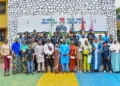


“I will continue to put more effort into this initiative to ensure that more less-privileged people benefit from it,” the governor said.
The governor commended his wife, Hajiya Nafisa Nasir Idris, for driving the programme through her foundation, noting that the initiative has expanded access to marriage support for vulnerable residents across Kebbi State.
He said the programme aligns with his administration’s broader agenda of improving the welfare of citizens through targeted social programmes, particularly those aimed at reducing hardship among low-income households.
Idris also used the occasion to urge residents to continue supporting President Bola Tinubu and the ruling All Progressives Congress, saying federal government policies had contributed to developmental progress in the state.
“I am one of the happiest people today because this large turnout shows that the people of Kebbi State support Mr President. We remain committed to the APC,” he added.
Speaking at the ceremony, the governor’s wife explained that the mass wedding initiative was conceived by her foundation to assist individuals who could not afford the expenses associated with marriage.
She assured residents that the programme would continue in subsequent years while appreciating donors, community leaders and organisations whose contributions ensured its successful execution.
She also advised the newly married couples to uphold Islamic teachings by building their homes on patience, mutual respect, understanding and the fear of Allah.
Also addressing the gathering, Dr. Mujidat Tinubu-Ojo, daughter of President Tinubu and Iyaloja-General of Nigeria, described the initiative as a commendable effort that promotes family values and provides meaningful support for disadvantaged members of society.
She congratulated the newlyweds and encouraged them to emulate the teachings of Prophet Muhammad (SAW) in nurturing peaceful and enduring marriages.
The marriage solemnisation was conducted according to Islamic rites by Sheikh Imam Mukhtar alongside other Islamic scholars.
As part of the ceremony, Governor Idris personally sponsored the marriages by paying ₦200,000 as dowry for each of the 300 brides, after which special prayers were offered for peaceful, successful and prosperous homes.
The governor also distributed household furniture, mattresses, kitchen utensils and other essential items to help the couples begin their married lives.
Leading Islamic scholars, including Sheikh Professor Mansur Ibrahim Sokoto, Sheikh Aminu Ibrahim Daurawa, Sheikh Abdulrahman Isah Jega, Sheikh Abdulrashid Makarfi and Sheikh Usman Zagga, delivered sermons highlighting the importance of marriage, family unity and moral responsibility in Islam.
The ceremony attracted senior government officials, traditional rulers and political leaders from across northern Nigeria, including Senator Abubakar Atiku Bagudu, Professor Suwaiba Sa’id, Hajiya Fatima Dikko Umar Radda, Hajiya Amina Umar Namadi, Senator Muhammad Adamu Aliero, the Emir of Argungu, Alhaji Isma’ila Muhammadu Mera, and the Emir of Zuru, Alhaji Muhammad Sani Sami Gomo III.
The Kebbi mass wedding programme has become one of the state’s most visible annual social welfare initiatives, reflecting a broader trend among some northern states of supporting low-income families through government-backed marriage assistance programmes conducted in line with Islamic traditions.