Six Nigerian opposition parties have opened formal negotiations on a possible alliance ahead of the 2027 general elections, setting up committees to develop a common political framework and roadmap for selecting a presidential candidate to challenge the ruling All Progressives Congress.
The parties — the African Democratic Congress, Allied Peoples Movement, Nigeria Democratic Congress, Peoples Democratic Party, Peoples Redemption Party and Social Democratic Party — reached the agreement at the G100 First Summit of Opposition Political Parties in Abuja on Monday.
The summit marks a fresh attempt to overcome the fragmentation that characterised the 2023 presidential election, when opposition votes were split among several candidates.

G100 convener, Salihu Lukman, argued that the opposition could have produced a different outcome in 2023 if its major political forces had coordinated their votes.
“Nobody stole thirteen million votes. We divided them ourselves, in public,” Lukman said, urging the parties to learn from the negotiations that preceded the 2015 election.
The parties agreed to establish three standing bodies — a Central Leadership Committee, Publicity and Communication Committee, and Legal Committee — to coordinate the emerging alliance.
Five additional working groups are expected to submit proposals within four weeks covering a National Covenant for Democratic Renewal, a Single-Term Transition Charter, a National Reform Programme, a Framework for Opposition Unity and a roadmap towards a common presidential candidate.
A major proposal presented at the summit is the creation of a Government of National Competence operating for a single four-year transition term if the opposition wins the 2027 election.
Lukman said the proposed arrangement would be anchored on competence, integrity, national inclusion and fair representation.
The coalition has yet to settle the question of who would fly a common presidential ticket.
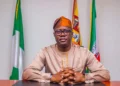
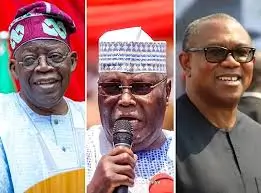
The talks have attracted prominent opposition figures, including PRP presidential candidate Donald Duke and SDP presidential candidate Adewole Adebayo. However, some of the biggest names linked to the emerging opposition movement — including ADC candidate Atiku Abubakar, NDC candidate Peter Obi and APM presidential candidate Seyi Makinde — were absent from Monday’s summit, with their parties represented by senior officials.
Duke nevertheless signalled his willingness to put personal ambition behind the coalition’s broader objective, saying he would support whichever candidate eventually emerges from the negotiations.
The Minority Leader of the House of Representatives, Fred Agbedi, also backed the initiative, saying the opposition’s objective should extend beyond removing the APC from power to addressing Nigeria’s economic and security challenges.
The parties also adopted a politically sensitive resolution calling on the United States government to lawfully disclose non-exempt official records concerning President Bola Tinubu that are considered matters of legitimate public interest.
The communiqué referenced an ongoing Freedom of Information case before the US District Court for the District of Columbia. The parties stressed that their demand did not presume the contents of undisclosed records or constitute a finding of wrongdoing.
They also resolved to communicate their position to the ECOWAS Commission.
For now, the G100 says it will remain a facilitator and observer rather than assume the authority of the participating political parties.
The next test will be whether the parties can turn their agreement into a workable structure, resolve competing presidential ambitions and persuade their respective supporters to accept a common political strategy.