



The Obi-Kwankwaso Movement, popularly known as the OK Movement, has vowed to retain its independent organisational structure despite a growing disagreement with the Nigeria Democratic Congress over the control of campaign activities ahead of the 2027 elections.
The movement’s Director-General, John Ozyl Ughulu, said on Wednesday that the organisation would not be collapsed into, merged with or subsumed under the NDC.
Ughulu was responding to comments by NDC National Leader, Seriake Dickson, who said support groups should complement political parties rather than operate as competing or parallel structures.


Dickson made the remarks in Abuja amid a dispute triggered by the OK Movement’s unveiling of a 59-member Presidential Campaign Council for the NDC’s presidential ticket of Peter Obi and Rabiu Kwankwaso.
The NDC subsequently dissociated itself from the council, saying it had not been authorised by the party.
According to the party’s position, only the NDC leadership can constitute and announce a presidential campaign council on behalf of its candidates.
The party also warned that support groups could not establish structures in the NDC’s name without approval from its National Working Committee.

The OK Movement has rejected that interpretation of its relationship with the party.
Ughulu said the movement was an independent political organisation comprising people from different political backgrounds who support Obi and Kwankwaso.
“The OK Movement remains an independent organisation. Its existence and internal administration are not subject to the internal management of the NDC Party,” he said.
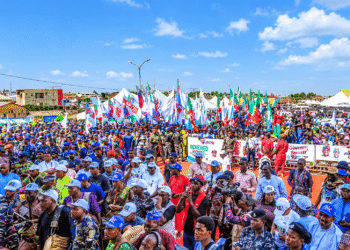
He added that the movement would continue to mobilise for the NDC candidates while maintaining its own national, state, local government and ward structures.
“The OK Movement will not be collapsed, merged or subsumed into the NDC or any other organisation. Cooperation and political alignment do not extinguish the independent identity of the Movement,” Ughulu said.
The dispute follows the September 17 unveiling of the 59-member campaign council, which included zonal and state coordinators and directors responsible for mobilisation, women’s affairs, strategy, security and legal affairs.
Ughulu was named director-general, while Saadatu Sani was named national secretary.
Sani had earlier rejected the NDC’s objection, arguing that the movement did not require the personal approval of individual party officials to conduct its internal organisational activities.
She also described the OK Movement as more than a temporary election support group and said it had developed a nationwide grassroots structure.
The movement has claimed that its internal database contains approximately 2.5 million registered members and coordinators nationwide.
The latest confrontation centres on the boundaries between the formal political party and an independent movement supporting its presidential candidates.
While the NDC insists that its candidates and campaign structures are subject to the party’s authority, the OK Movement argues that supporting Obi and Kwankwaso does not make it an organ of the NDC.
The disagreement comes months after Obi and Kwankwaso formally joined the NDC in May and became central figures in the party’s 2027 presidential campaign.
For now, the OK Movement says it will continue supporting the NDC ticket while retaining control of its own organisational machinery, leaving the dispute over campaign structures and political authority unresolved as preparations for the 2027 elections continue.