


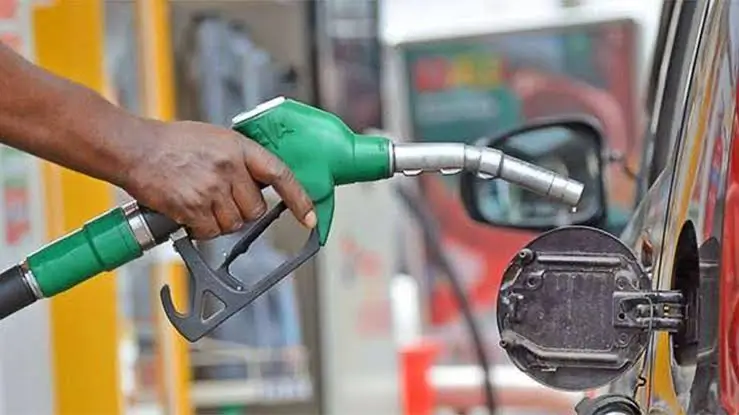
The Minister of State for Petroleum Resources (Oil), Heineken Lokpobiri, has defended Nigeria’s deregulated petrol market, saying the average pump price in the country remains below prices in the United States and some African countries.
Lokpobiri made the claim during an appearance on Channels Television’s Politics Today on Tuesday, amid renewed concerns over petrol prices following recent increases linked to movements in the international crude oil market.
According to figures cited by the minister, petrol sells for an average of about ₦1,430 per litre in Nigeria, compared with ₦1,633 in the United States, ₦1,959 in Cameroon and about ₦2,070 in both Ghana and South Africa.

The figures were presented by Lokpobiri as naira-equivalent comparisons, while petrol prices vary across locations and markets.
His comments came as domestic wholesale petrol prices began easing following a decline in international crude prices.
The Dangote Petroleum Refinery reduced its Lagos depot price from ₦1,350 to ₦1,325 per litre, while several other marketers also cut their depot prices. Similar adjustments were recorded in Port Harcourt, Calabar and Warri.
Retail petrol prices, however, remained around ₦1,370 to ₦1,450 per litre in some locations.
Lokpobiri argued that being an oil-producing country does not automatically mean Nigeria should have the cheapest petrol.
He pointed to the United States as an example, noting that the country is a major oil and gas producer with substantial refining capacity but still has higher fuel prices than Nigeria based on the comparison he cited.
The minister also linked the current pricing structure to the Federal Government’s decision to remove petrol subsidy and deregulate the downstream sector.
He argued that deregulation had created room for private investment in refining and other parts of the petroleum value chain.

According to him, continued government importation and subsidised sales could have made it difficult for private refineries, including the Dangote refinery, to operate commercially.
Lokpobiri said the policy was intended to create a market in which private-sector businesses could invest across the midstream and downstream segments.
He also defended the fiscal implications of subsidy removal, saying increased revenues had enabled higher allocations through the Federation Account Allocation Committee.
The minister said about ₦2.1tn was now being shared through FAAC, which he linked partly to savings generated from ending the petrol subsidy.
However, the removal of subsidy has continued to place pressure on Nigerian households and businesses, with petrol prices rising sharply during recent periods of international crude-price increases.
Lokpobiri maintained that the pressures were not unique to Nigeria because crude oil and petroleum products are exposed to international market movements.
He said developments in the Middle East could continue to influence global energy prices, arguing that Nigeria could not completely insulate its domestic market from international oil-price movements.
The minister said the government would not reverse deregulation despite calls for relief from consumers, maintaining that a market-based system was necessary to attract long-term investment.
He also pointed to the Dangote refinery’s growing role in supplying refined products, including aviation fuel, and developments in foreign-exchange earnings from the petroleum sector as signs of changes taking place under the deregulated system.