



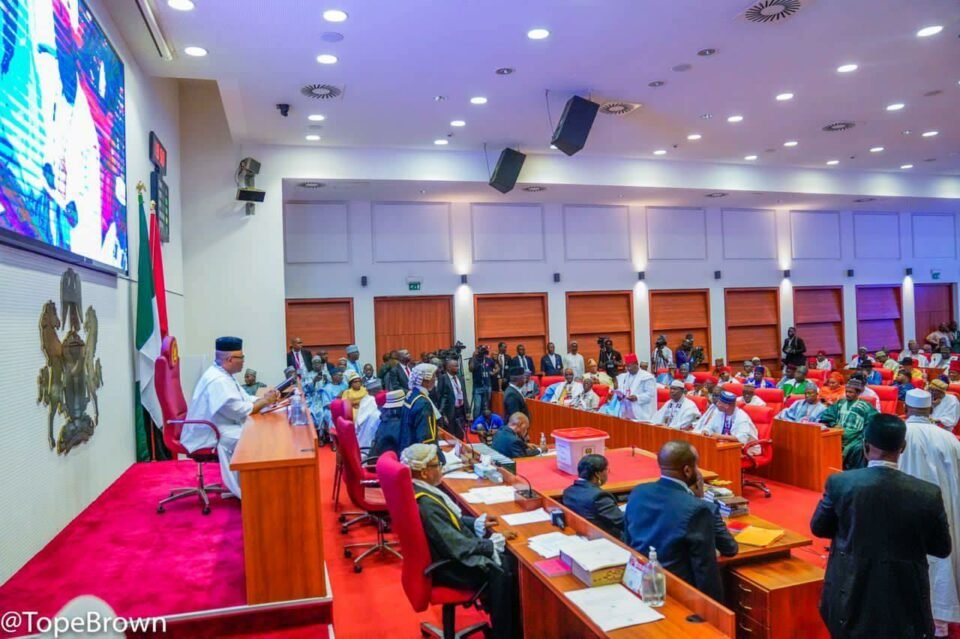
The Senate has passed a bill seeking to establish a Federal College of Agriculture in Shani Local Government Area of Borno State, in a move aimed at improving agricultural education, promoting modern farming methods and boosting food production.
The bill, sponsored by Senator Mohammed Ali Ndume, who represents Borno South, was passed at the third-reading stage on Thursday after the chamber adopted a report presented by the Senate Committee on Agricultural Colleges and Institutions.
The proposed institution is expected to provide agricultural training and encourage farmers to adopt improved production techniques, modern technology and better crop varieties.




Ndume said Nigeria’s dependence on traditional farming practices remained a major obstacle to improving agricultural productivity, arguing that greater investment in agricultural education and technology was necessary to address the problem.
“One of the fundamental challenges facing agriculture in Nigeria is our continued reliance on crude farming methods,” the senator said.
“We have not made sufficient progress in improving productivity and making farming easier through modern technology.”
He added that the proposed college would help farmers acquire practical knowledge and skills needed to improve cultivation methods and increase output.
The senator also highlighted Shani’s agricultural potential, describing the area as a suitable location for an institution dedicated to agricultural education and development.
According to Ndume, the local government is known for producing rice, tomatoes and onions and shares boundaries with Adamawa and Bauchi states, both of which have significant farming communities.
“For those who may not know Shani, it is a local government area in Borno South. It is known for agriculture, particularly the cultivation of rice, tomatoes and onions,” he said.
Ndume described the Senate’s passage of the bill as a significant achievement in his legislative career, particularly as the National Assembly approaches the end of its legislative session.
Senate President Godswill Akpabio commended the committee for its work and praised Ndume for sponsoring the proposed legislation, expressing optimism that the institution would contribute to agricultural development.
The bill’s passage comes amid continuing efforts to strengthen agricultural education and improve food production in Nigeria. Agricultural institutions are expected to play a role in equipping farmers and young people with practical skills, supporting research and encouraging the adoption of technologies that can improve yields.
However, the Senate’s approval does not mean the college has been formally established. The bill must still pass through the remaining legislative and constitutional procedures before the proposed institution can become law.

Following its passage by the Senate, the bill is expected to be transmitted to the House of Representatives for concurrence. If the House approves the measure, it will then be forwarded to President Bola Tinubu for assent.
If enacted and adequately funded, the proposed college could provide opportunities for agricultural training and skills development in Shani and neighbouring farming communities. Its eventual impact will depend on implementation, infrastructure, staffing and access to modern agricultural equipment.