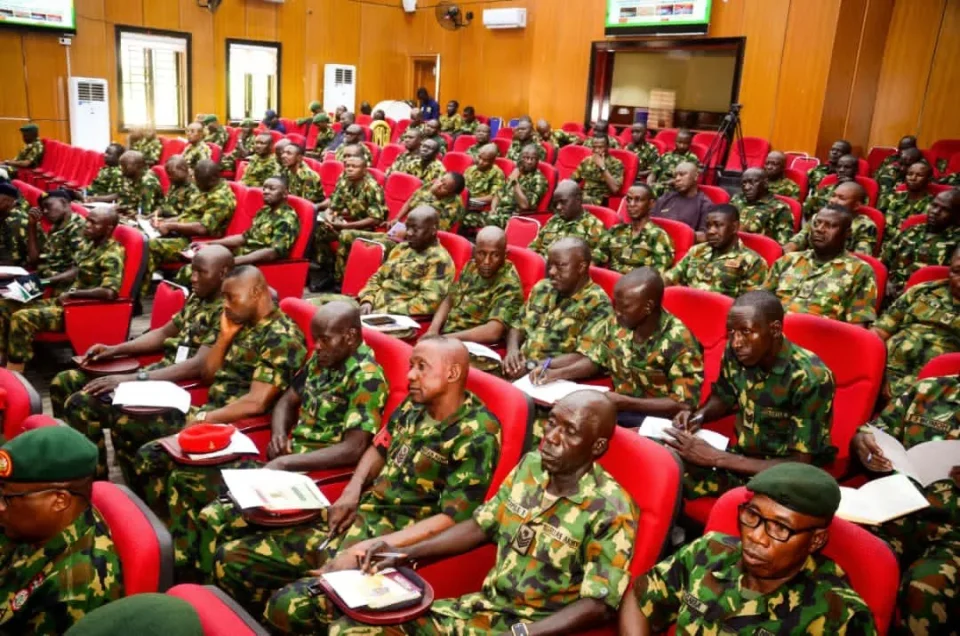
The Nigerian Army has organised a five-day leadership development course for senior non-commissioned officers serving under its 8 Division and Sector 2 of Operation FANSAN YAMMA, as part of efforts to strengthen discipline, professionalism and operational effectiveness.
The Leadership Awareness and Development Course is designed to equip participants with leadership skills and practical knowledge to improve their performance amid Nigeria’s evolving security challenges.
According to a statement issued on Thursday by the Acting Deputy Director, Army Public Relations, 8 Division, Lieutenant Colonel Olaniyi Osoba, the programme aligns with the Chief of Army Staff’s command philosophy of building a professional, adaptable and combat-ready force.




Representing the General Officer Commanding 8 Division and Commander of Sector 2, Operation FANSAN YAMMA, Major General Bemgba Koughna, the division’s Chief of Staff, Brigadier General Ibrahim Gambari, welcomed participants and acknowledged the Nigerian Army Resource Centre for facilitating the programme.
Koughna described the course as a strategic intervention intended to equip senior non-commissioned officers with the knowledge and skills needed to improve their performance and service delivery.
He said the training would deepen participants’ understanding of their leadership responsibilities and help address existing gaps, particularly in joint operations involving multiple security agencies.
Army Warns Against Social Media Misuse
The GOC urged participants to pay close attention to the sessions and apply the lessons learned to strengthen leadership, discipline and professionalism within their ranks.
He also cautioned against the misuse of social media, emphasising the importance of coordination, cooperation and collaboration during joint operations.
The warning highlights the need for military personnel to exercise sound judgment in their online activities, particularly in an operational environment where unauthorised disclosures and irresponsible communication can create security and reputational risks.
Social media misuse and its implications were among the subjects covered by the course.

Course Targets Combat Leadership Skills
The Director-General of the Nigerian Army Resource Centre, retired Major General James Gwaza Khalifa Myam, was represented at the programme by retired Major General Ifiok Obot.
Myam said the course was specifically designed to address the demands of combat leadership, which places significant responsibilities on senior non-commissioned officers and requires discipline, competence and commitment.
He said the programme would develop creativity, emotional intelligence, critical thinking and other contemporary leadership skills to help participants adapt to changing operational demands.
The training also covered leadership frameworks, inter-agency cooperation, leadership during crises and war, and the implications of social media misuse.
Other subjects included the Constitution of the Federal Republic of Nigeria, the Armed Forces Act and the military justice system. These areas are intended to strengthen participants’ understanding of the legal and professional responsibilities attached to military service.
Focus on Coordination and Professionalism
The course comes as security agencies continue to confront complex threats that require coordination across military and other law enforcement institutions.
Effective joint operations depend not only on equipment and tactical capability but also on communication, leadership, discipline and a clear understanding of each agency’s responsibilities.
For senior non-commissioned officers, these demands extend beyond individual performance to include supervising personnel, maintaining standards and ensuring that orders are implemented professionally.
The Army said the training was intended to improve participants’ ability to fulfil those responsibilities while contributing to a more professional and effective force.
Participants were urged to apply the knowledge gained to their duties, with particular attention to discipline, collaboration and responsible conduct.
The impact of the programme will ultimately depend on how effectively its lessons are applied within units and during operational assignments.