


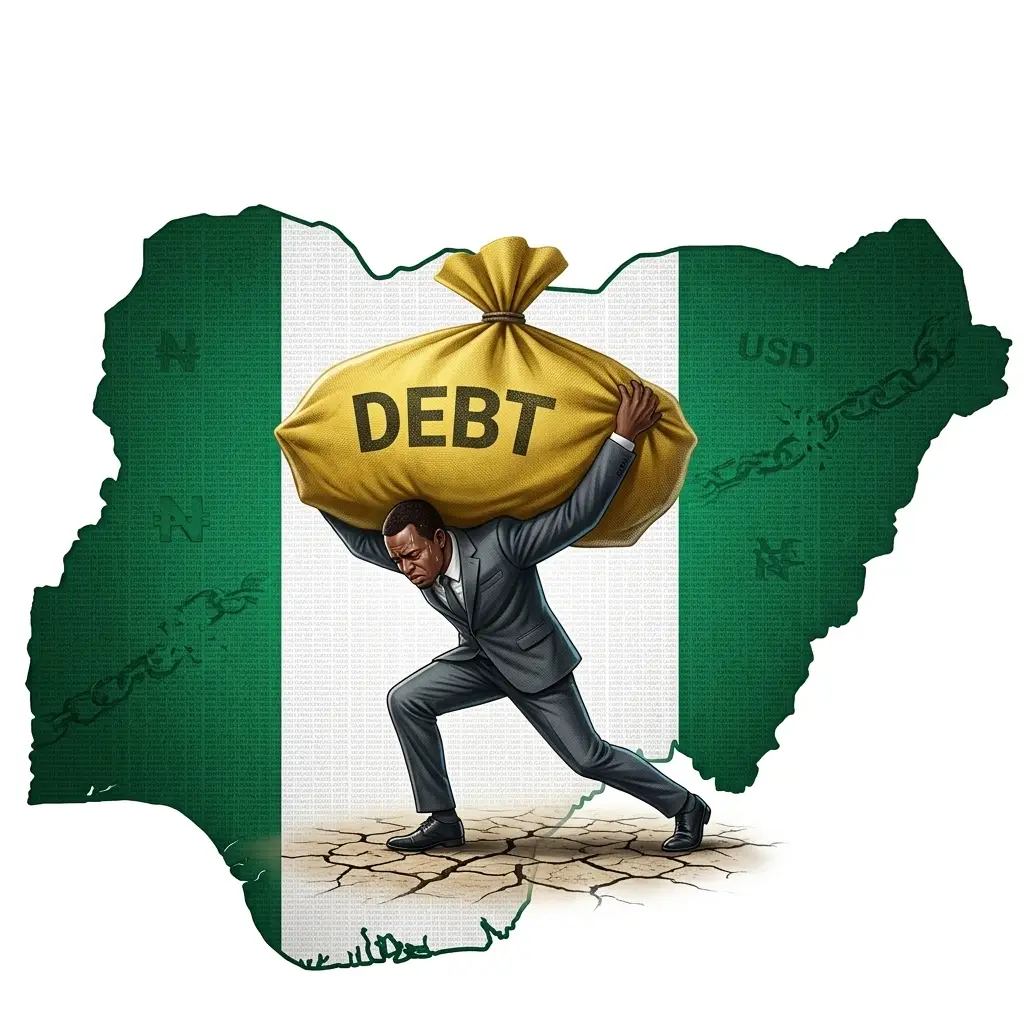
Nigeria spent approximately N5.28tn servicing its domestic debt between January and June 2026, with interest and rental payments accounting for the bulk of the expenditure, according to figures released by the Debt Management Office.
The data show that the Federal Government incurred N4.95tn in interest and rental payments during the six-month period, while N333.96bn went towards repaying the principal on promissory notes.
The figures highlight the cost of domestic borrowing for public finances as the government balances debt obligations against demands for infrastructure, healthcare, education and other development priorities.




Bonds, Treasury Bills Dominate Payments
Federal Government bonds accounted for the largest share of interest and rental payments, attracting approximately N3.35tn between January and June.
Nigerian Treasury Bills followed with about N1.49tn, making the two instruments the dominant contributors to the government’s domestic debt-servicing bill.
Monthly payments on Federal Government bonds fluctuated throughout the period. They rose from N462.44bn in January to N707.25bn in February before reaching a peak of N792.34bn in March.
Payments subsequently declined to N530.84bn in April and N332.49bn in May, before increasing to N525.05bn in June.
Treasury bill interest payments reached approximately N1.49tn over the six months, with March recording the highest monthly amount at about N481.47bn.
Other instruments also attracted payments. Federal Government Sukuk rentals amounted to N92.29bn, while interest payments on FGN Savings Bonds stood at N8.90bn. Green bond interest payments totalled N5.56bn.
The figures indicate that conventional government bonds and Treasury bills accounted for most of the reported cost of servicing domestic debt during the first half of 2026.
Promissory Notes Add to Debt Obligations
Beyond interest and rental payments, the Federal Government repaid N333.96bn in principal on promissory notes during the period.
March recorded the largest monthly repayment, at N154.23bn, followed by June with N136.96bn.
Of the total principal repayments, N263.27bn related to naira-denominated promissory notes, while foreign-currency-denominated notes accounted for N70.69bn.
The combined monthly cost of domestic debt servicing varied considerably. March recorded the highest outlay, at approximately N1.43tn, followed by February with N967.67bn.
June’s total stood at N811.62bn, while April recorded N765.19bn and January N741.82bn. May had the lowest monthly expenditure, at N567.16bn.
These fluctuations reflect the timing of interest obligations, rental payments and principal repayments across the government’s domestic debt instruments.
Economist Warns of Pressure on Development Spending
The scale of the expenditure has renewed attention on the trade-off between debt obligations and spending on public services and development projects.
Abuja-based economist Nonso Iheoma warned that continued heavy spending on domestic debt could leave the government with fewer resources for other priorities.
“If you keep spending this huge amount on repaying your local debt, you will be left with less for important development issues,” he said.
Iheoma acknowledged that borrowing remained necessary but argued that the government could reconsider its sources of financing.

“Though we can’t do without debts, we can do well by changing the sources of the debts. During this period, returns on fixed-income securities exceeded or were close to 20 per cent due to high interest rates,” he added.
High yields can make government securities attractive to investors, but they also increase the cost of borrowing for the government. The longer-term fiscal implications depend on borrowing terms, revenue performance and whether borrowed funds support productive investments.
The figures follow a costly year for Nigeria’s public finances. Total debt servicing rose from N12.83tn in 2024 to N15.81tn in 2025, while domestic debt servicing increased from N5.87tn to N8.61tn.
The latest figures underscore the challenge facing policymakers as they seek to meet existing obligations while maintaining funding for economic development.