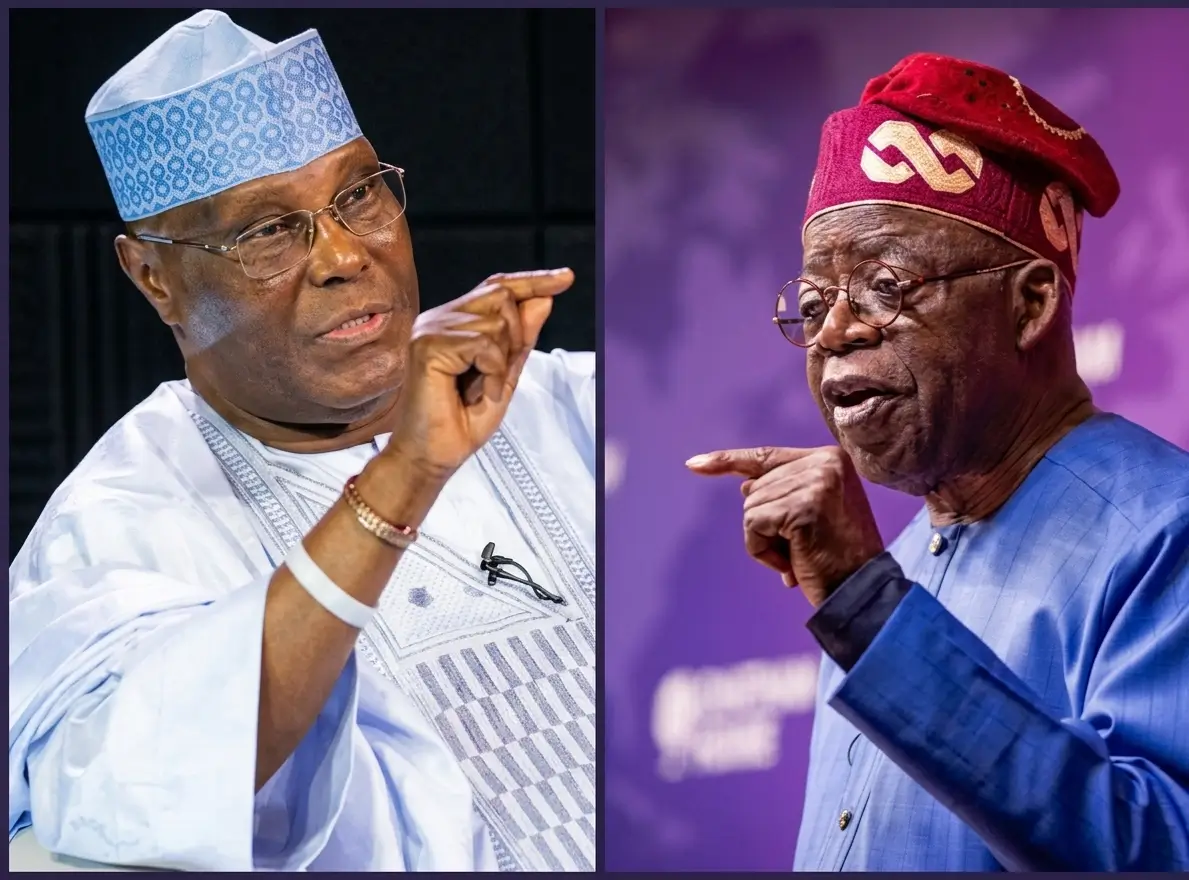
President Bola Tinubu has criticised former Vice President Atiku Abubakar’s pledge to restore petrol subsidy if elected president in 2027, describing the proposal as evidence of “serious ignorance” of governance and the economy.
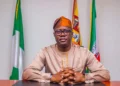
Tinubu spoke on Thursday at the Presidential Villa, Abuja, while receiving Osun State Governor Ademola Adeleke, who recently secured a second term in the August 15 governorship election.
The President’s remarks came as the economic battle between his administration and Atiku intensifies ahead of the 2027 presidential election.


Atiku, the presidential candidate of the African Democratic Congress, has made the hardship associated with petrol subsidy removal a major part of his criticism of the Tinubu administration.
Tinubu, however, defended the decision, arguing that restoring the subsidy would take Nigeria back to the fiscal difficulties experienced by governments before the policy was removed.
“I saw one of my opponents now say he will go back to subsidy. I read it. That is a demonstration of serious ignorance on governance and economy,” the President said.
Tinubu recalled the financial condition of state governments before his administration removed the subsidy, saying 27 states were unable to meet salary obligations.
“Before I came here, 27 states are unable to pay salaries, not to even talk of pensioners,” he said.
The President argued that the reform had increased the resources available to states and local governments to fund public services and infrastructure.
He listed road construction, housing, school rehabilitation, healthcare, teacher training and the training of health workers among areas where governments could now deploy additional resources.
“Salary you pay for each family, they were at the local governments, they are in the states,” Tinubu said.
The subsidy issue has become one of the most contentious elements of Nigeria’s economic policy since Tinubu announced its removal in May 2023.
While the Federal Government has defended the policy as necessary to reduce the burden of subsidy payments and improve fiscal sustainability, critics have repeatedly argued that the resulting increase in petrol prices has placed enormous pressure on households and businesses.
Atiku has accused the administration of failing to adequately account for the savings from subsidy removal and has questioned the government’s borrowing, taxation and broader economic policies.
The former vice president secured the ADC presidential ticket in May and is expected to make economic hardship a central theme of his 2027 campaign.
Tinubu’s remarks therefore add a fresh dimension to what is likely to become one of the defining economic arguments of the next presidential election: whether Nigeria should maintain the current market-based fuel pricing system or introduce a form of government intervention to lower petrol costs.
At the Villa meeting, Tinubu also used Adeleke’s victory in Osun to deliver a message on political reconciliation.
The President congratulated the governor and urged him to use his second-term mandate to unite the state rather than treat the election as a battle in which opponents had been defeated.
“You did not conquer anybody. You won the election. That is the essence of democracy,” Tinubu said.
He asked Adeleke to promote democracy, stability and the rule of law, while warning against stigmatising political opponents.
“Don’t stigmatise any of your opponents,” the President said.
The Independent National Electoral Commission declared Adeleke winner of the August 15 poll after he polled 511,067 votes, defeating APC candidate Bola Oyebamiji, who scored 444,815 votes. Adeleke won 19 of the state’s 30 local government areas.
The governor had earlier praised Tinubu for what he described as the President’s support for a free and fair election and extended an olive branch to his opponents.
Tinubu told Adeleke that his victory had placed him in a “very, very unique position” to make history by promoting unity, peace and stability.
The meeting came against the backdrop of a changing political landscape ahead of 2027, with Tinubu seeking re-election and Atiku emerging as one of the leading opposition challengers.