


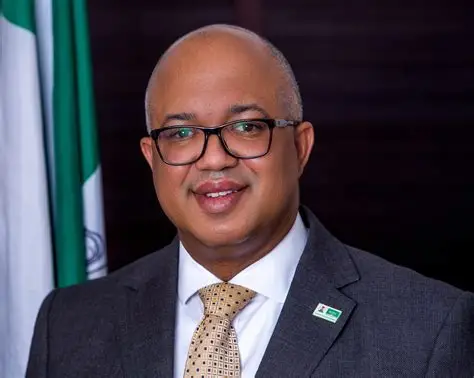
The World Health Organisation (WHO) has said Nigeria must complete a 42-day monitoring period before it can be declared free of Ebola, despite the evacuation of the confirmed patient to Switzerland.
Dr Chikwe Ihekweazu, executive director of the WHO Health Emergencies Programme, said health authorities must monitor identified contacts of the patient for 21 days, followed by another 21-day period, in line with established protocols for ending an Ebola outbreak.
Speaking during an interview with ARISE News on Wednesday, Ihekweazu said 53 people had been identified as contacts of the patient and that surveillance remained critical to preventing further transmission.
READ ALSO




He explained that the monitoring period was necessary even though the infected patient and her husband had been medically evacuated to Switzerland.
“What it means still is that we have about 53 people, contacts, individuals with whom that individual had contact over the days that she was ill. And now we have to continue to follow each of them for 21 days and then require another 21 days, coming up to 42, in order to declare Nigeria Ebola-free,” he said.
“These are the standard protocols as defined by the World Health Organisation, where I work, and which we use in every country around the world that has a similar incident.”
The WHO official’s remarks followed a statement by the organisation’s Regional Director for Africa, Mohamed Janabi, who said on Monday that Nigeria had no active Ebola cases following the patient’s evacuation to Switzerland.
Janabi said the patient was clinically stable after receiving treatment from Nigerian medical personnel. He added that Swiss authorities would assume responsibility for her continued care and the monitoring of her husband, who was identified as contact number 53.
“The Nigerian medical team successfully managed her through the acute phase of the illness and stabilised her condition,” Janabi said.
He added, “With the evacuation of the patient and her husband, Nigeria currently has no Ebola cases.”
However, the absence of an active case does not mean Nigeria has met the criteria for being declared Ebola-free. Health authorities must complete the required surveillance period and establish that no further transmission has occurred.
Why Nigeria must wait 42 days
Ihekweazu explained that Ebola belongs to a group of infections known as viral haemorrhagic fevers, which require a coordinated public health response whenever a case is confirmed.
“For certain diseases, a group of diseases we call the viral haemorrhagic fevers, of which Ebola is one of them, we consider every single case an equivalent of an outbreak and requiring a coordinated response,” he said.
He added that the WHO had supported the Nigerian government in implementing the necessary response measures.
Ihekweazu also dismissed suggestions that the patient’s evacuation reflected weaknesses in Nigeria’s capacity to manage Ebola.
He said the transfer was carried out at the request of the patient’s country of origin and was not prompted by any deficiency in the treatment provided in Nigeria.
“On Tuesday we saw the medical evacuation of the patient from Nigeria to the country from which the patient came. This wasn’t a response to any deficit in the management capacities in Nigeria,” he said.
“This was at the request of the country of origin of the case.”
WHO praises Nigeria’s response
The WHO official commended Nigerian health authorities for their handling of the case, highlighting the speed of laboratory confirmation and genetic sequencing, as well as the patient’s clinical management.
He said the country had implemented the recommended response measures and expressed confidence in the ongoing effort.
“Nigeria’s going to be proud of the response so far,” he said.
The next phase will depend on the daily monitoring of identified contacts, rapid identification of symptoms and immediate intervention if another suspected case emerges.

Ihekweazu said health authorities were tracking contacts to ensure that any further transmission would be detected early and managed appropriately.
No recommendation to restrict public gatherings
Addressing concerns about political rallies and other public gatherings, Ihekweazu said the WHO had not recommended additional restrictions.
He stressed that the organisation’s advice was based on technical assessments rather than political considerations.
“We haven’t advised any restrictions on further gatherings. Our advice is never political,” he said.
“It’s always technical. And we will continue to support the government in this response.”
He urged Nigerians to trust the government and relevant health agencies, warning against politicising the public health response.
For now, Nigeria’s priority remains the completion of contact tracing and surveillance. The country can only be declared Ebola-free when the required monitoring period has been completed without evidence of further transmission.