Isese worshippers in Oyo town have called for peace, restraint and respect for traditional institutions amid concerns over public statements and unverified allegations capable of creating divisions within Yoruba cultural and religious communities.
The worshippers, under the Isese Religious Association in Oyo, cautioned traditionalists, bloggers and other social media users against publishing inflammatory claims about the Alaafin of Oyo, Oba Akeem Owoade, and other traditional rulers.
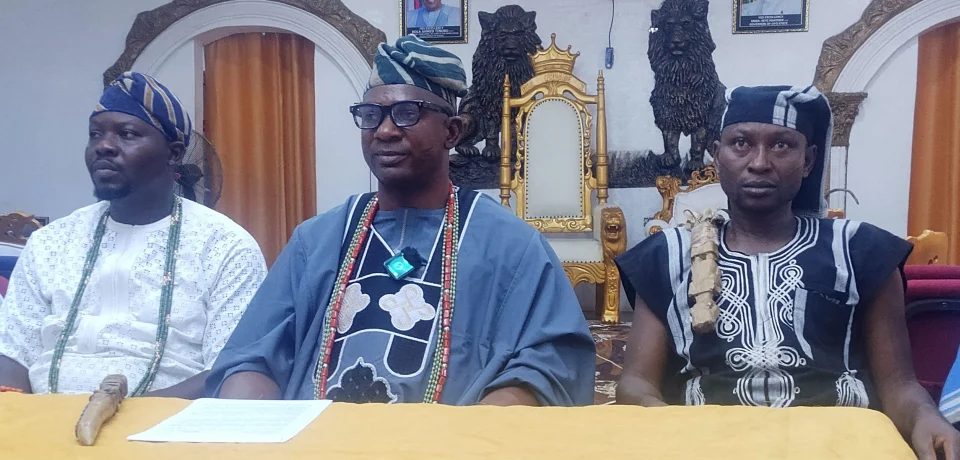
The chairman of the Isese Worshippers Committee and Asiwaju Ask of Oyo, Chief Onifade Olanipekun, made the appeal during a press briefing at the Alaafin’s palace on Friday.




Olanipekun said Yoruba traditional institutions remained important custodians of the people’s history, identity, customs and collective heritage, stressing that disagreements should not be allowed to undermine peaceful relationships among cultural and religious groups.
“Our kings and traditional institutions represent important aspects of our history, identity, customs, and collective heritage. They deserve responsible public engagement, constructive dialogue, and respect, even when opinions differ,” he said.
He warned that unverified allegations and inflammatory publications could create unnecessary divisions among Yoruba people and their traditional institutions.
The association also described an allegation concerning the relationship between the Isese community and the Alaafin’s institution as misleading, arguing that it did not reflect the community’s position.
Support for Alaafin’s throne
Olanipekun reaffirmed the association’s support for the Alaafin’s throne, saying its commitment to the institution predated the installation of Oba Owoade.
He said the community’s position was rooted in its reverence for Yoruba ancestors, spiritual heritage and the customs of Oyo Kingdom.
“The Isese community and Sàngó worshippers in Oyo town wish to state unequivocally that our support for the Alaafin’s throne did not begin today,” he said.
According to him, the throne carries historical and spiritual significance within the community’s understanding of Yoruba tradition.
He added that preserving the institution required collective responsibility to protect Oyo’s history, customs and cultural identity for future generations.
Olanipekun urged members of the public to distinguish between statements made by individuals and the official position of the association.
He cautioned against attributing social media comments by individuals to the entire Isese community, noting that such generalisations could misrepresent the association and deepen disagreements.
“We believe promoting Isese requires knowledge, integrity, responsibility, and respect for our collective heritage. No individual should use the name of our religion to create unnecessary hostility or mislead the public about the position of the Isese community in Oyo,” he said.
Alaafin’s representative calls for unity
Earlier, the Director of Administration to the Alaafin, Prince Adesola Sanda, who represented the monarch at the briefing, called for unity and mutual understanding among traditional religious associations.
Sanda highlighted the Yoruba concept of Omoluabi, which emphasises good character, integrity, responsibility and respect for others.
He said these values remained important to traditional religious associations, particularly in their relationships with elders, ancestral lineages and established cultural institutions.
The appeal comes amid the continuing importance of traditional rulers and cultural organisations in preserving Yoruba heritage and mediating community relationships.
The Alaafin of Oyo occupies a prominent place in Yoruba history, while Isese refers broadly to indigenous Yoruba religious and spiritual traditions. Sàngó worship forms part of that wider traditional religious heritage.

The association’s statement emphasised that cultural and religious differences should be addressed through dialogue rather than public accusations or provocative commentary.
The specific allegation described as misleading was not detailed in the statement provided, and the identities of those responsible for the disputed publications were not established.
The association urged traditionalists and other members of the public to exercise restraint in their comments about the Alaafin, other traditional rulers and Yoruba cultural institutions.