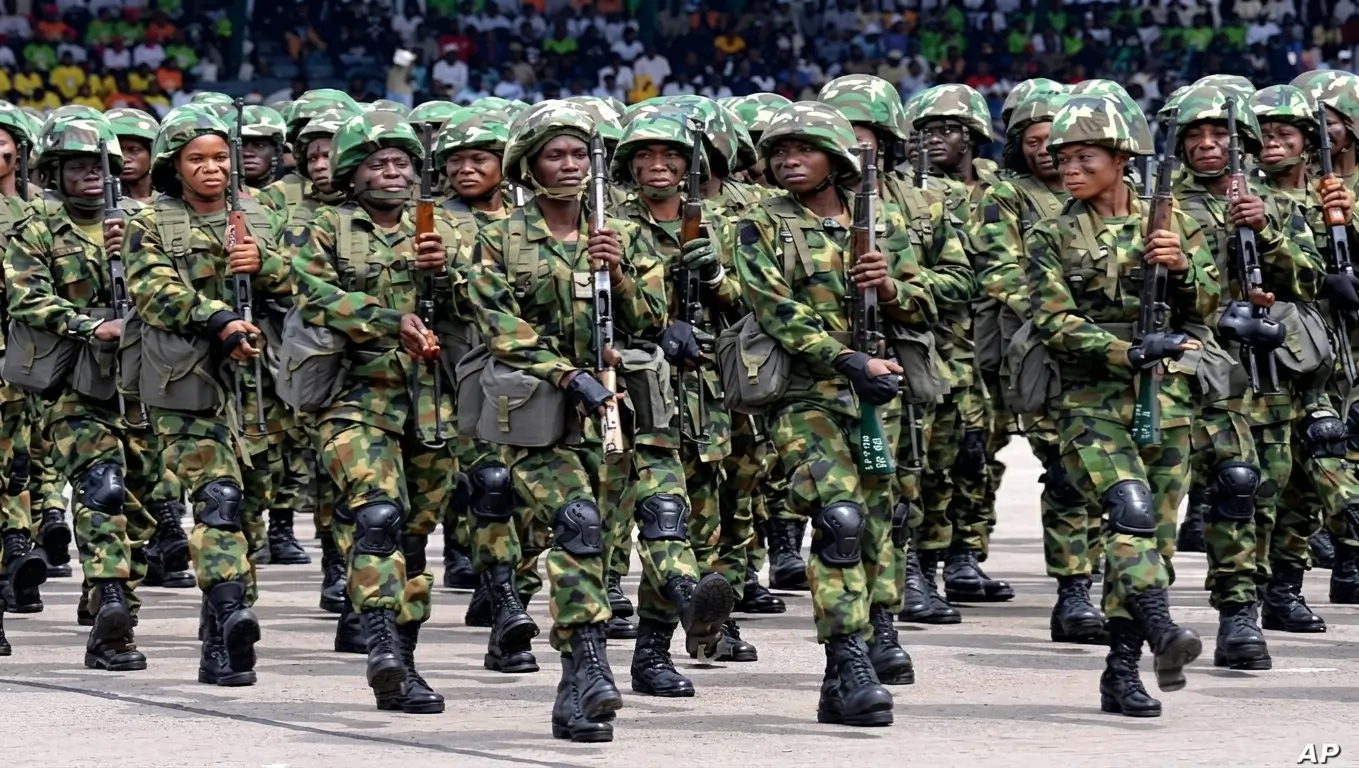
The Federal Government has disbursed N5.15tn in special intervention funds to the Nigerian military and related security agencies between November 2023 and September 2026, as the country continues to grapple with terrorism, banditry, kidnapping and other security challenges.
The disbursements represent 91.15 per cent of the N5.65tn received into a dedicated intervention account during the period, according to an analysis of Federation Account Allocation Committee documents obtained by The PUNCH.
The figures were contained in a document titled Ledger of Special Intervention Programme for Nigerian Military September, 2026, prepared by the Federation Account Department of the Office of the Accountant-General of the Federation.




The document was presented to the Technical Sub-Committee of FAAC at its meeting in Abuja on October 14, 2026.

The records showed that the intervention was funded through allocations from the Federation Account, non-oil revenue and transfers from a FAAC withholding account.
The N5.15tn was released through 30 payment transactions, while the account recorded 33 funding transactions.
The intervention funds were separate from the regular annual budgetary allocations to the Ministry of Defence and other security institutions.
However, the ledger did not provide details of the military operations, equipment purchases, personnel expenses or specific security projects financed with the money.
Military funding increases in 2026
The intervention programme began with a N100bn transfer on October 19, 2023, identified as the September 2023 allocation.
The government subsequently maintained a N100bn monthly funding pattern through much of 2024 and 2025.
Between January and December 2024, the account received and disbursed N1.2tn, bringing cumulative payments to N1.5tn.
During the first nine months of 2025, another N900bn was received and disbursed, taking cumulative payments to N2.4tn by September 1, 2025.
However, the funding arrangement changed considerably in 2026, with individual transfers increasing to between N200bn and N500bn.
The records showed that the government received N3.25tn into the intervention account in 2026 as of October 14, while N2.75tn was disbursed.
Some of the largest transactions included a N500bn transfer and payment on June 16, another N500bn disbursement in July and a further N500bn payment in August.
In September, N500bn was transferred on September 16, with the corresponding payment recorded on September 23.
Another N500bn was transferred on October 14 as the September allocation, but no corresponding payment appeared in the ledger.
This left an outstanding balance of N500bn in the account, representing 8.85 per cent of total receipts.
The N2.75tn disbursed in 2026 accounted for 53.40 per cent of the entire N5.15tn released since the programme began.
FG reviews national security strategy
In a related development, the Federal Government has inaugurated a 33-member committee to review the 2019 National Security Strategy and develop a new framework addressing emerging security threats.
The National Security Adviser, Nuhu Ribadu, announced the initiative on Thursday, October 29, during the inauguration of the committee in Abuja.
Ribadu, represented by Major General Sarkin Bello (retd.), said Nigeria’s security environment had changed considerably since the last review in 2019.
He identified terrorism, banditry, kidnapping, cyber threats, misinformation, economic difficulties, food insecurity and environmental challenges as issues requiring a comprehensive national response.
The NSA said the proposed National Security Strategy 2026 would provide an overarching framework for coordinating national security, resilience and sustainable development.
The committee is expected to submit its final draft to the NSA by November 27, 2026.
The committee’s deputy chairman, Major General Emeka Onumajuru (retd.), also called for a strategic realignment to address the increasingly interconnected nature of conventional and non-kinetic security threats.
He said the new framework should integrate national defence with economic prosperity, good governance and human security.