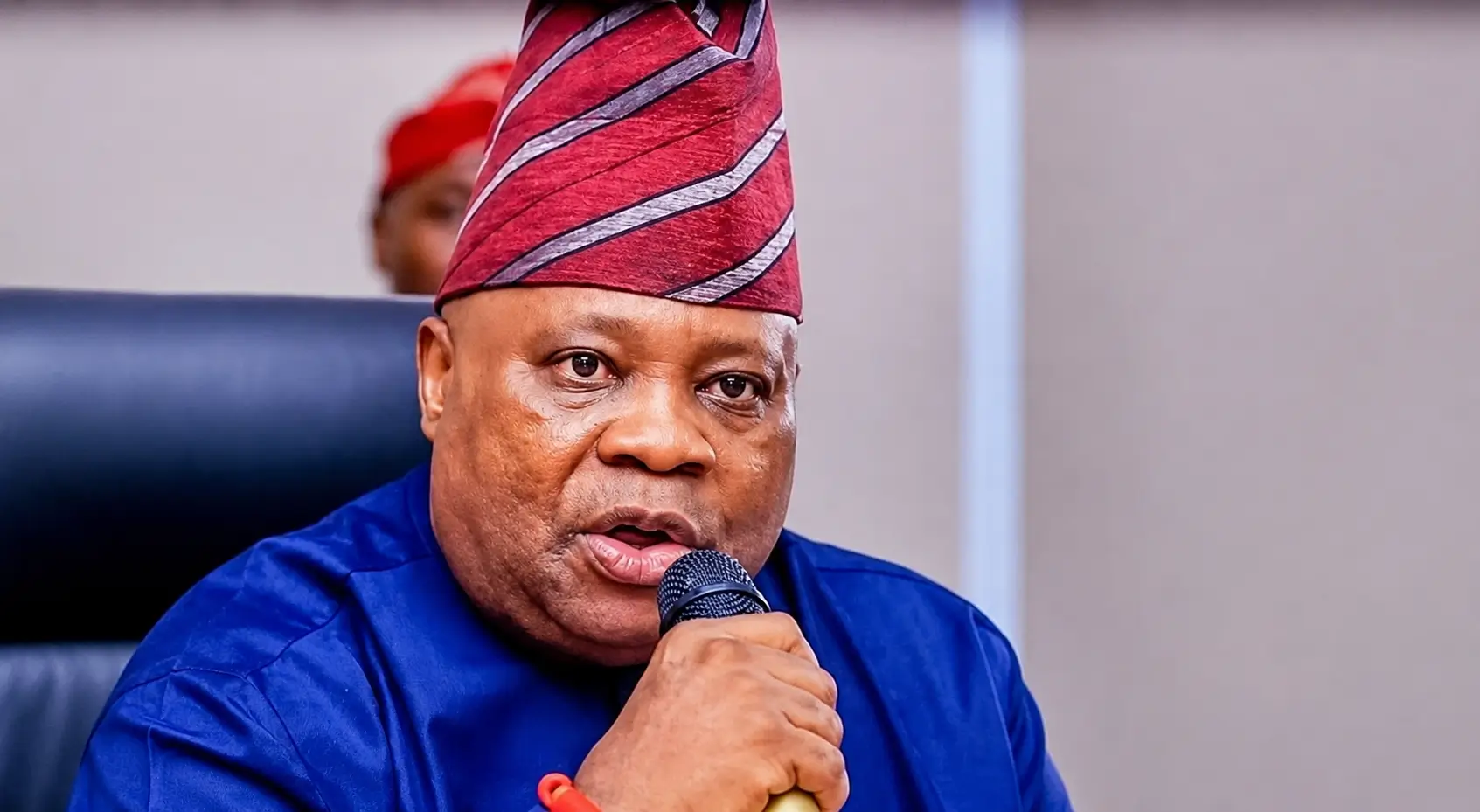
As Osun State voters prepare to return to the polls on Saturday, August 15, Governor Ademola Adeleke’s political journey offers one of the clearest examples of how a razor-thin electoral defeat can be followed by a decisive comeback.
The governor’s first major attempt at the Osun governorship came in 2018, when he contested on the platform of the Peoples Democratic Party. His closest challenger was the All Progressives Congress candidate, Gboyega Oyetola.
The initial result was so close that Adeleke appeared to have secured victory.



He polled 254,698 votes against Oyetola’s 254,345, giving him a 353-vote advantage. But the Independent National Electoral Commission declared the election inconclusive because 3,498 votes had been cancelled in areas where supplementary voting was required.
The margin between the two leading candidates was smaller than the number of cancelled votes, prompting INEC to order a supplementary election.
That exercise changed the outcome.
Oyetola secured enough additional votes to overturn Adeleke’s lead and was declared the winner with 255,505 votes, against Adeleke’s 255,023 — a difference of only 482 votes.
The defeat did not end Adeleke’s ambition.
Four years later, the two men returned to the political battlefield, this time with Oyetola seeking another term as incumbent governor and Adeleke again carrying the PDP flag.
The July 16, 2022 election produced a dramatically different result.
Adeleke polled 403,371 votes to defeat Oyetola, who scored 375,027 votes. Adeleke won 17 of the state’s 30 local government areas, while Oyetola won 13.
The 28,344-vote margin was a dramatic reversal of the 482-vote difference that had separated them four years earlier.
The victory finally delivered the governorship Adeleke had pursued since his first attempt.
But the 2022 election did not immediately end the contest.
Oyetola and the APC challenged the result at the election tribunal, alleging irregularities in the conduct of the poll. The dispute travelled through the appellate courts before the Supreme Court eventually affirmed Adeleke’s victory in 2023.
Adeleke was therefore sworn in as governor after a political journey that had moved from a 482-vote loss to a 28,344-vote victory.
Now, four years after that breakthrough, he faces another electoral test.
The 2026 Osun governorship election is scheduled for Saturday, August 15. Adeleke is seeking re-election on the platform of the Accord Party, while the APC is fielding Bola Oyebamiji.
The latest contest has already generated intense political exchanges. Adeleke has presented the election as a referendum on his administration, while Oyebamiji has campaigned on the promise of returning the APC to power.
Oyebamiji has also repeatedly presented himself as President Bola Tinubu’s endorsed candidate, making the claim a major feature of his campaign.
Adeleke’s camp, meanwhile, has focused on continuity and the governor’s record since taking office. He emerged as Accord’s candidate after the party’s December 2025 primary, where he was the sole aspirant.
The stakes are therefore different from 2018 and 2022.
In 2018, Adeleke was chasing power and lost by 482 votes. In 2022, he returned and won by more than 28,000 votes.

On Saturday, he will attempt to turn that comeback into a second consecutive electoral mandate.
For an election that has repeatedly been shaped by narrow margins, legal battles and political reversals, Osun’s latest contest once again puts Adeleke’s electoral journey under the spotlight.