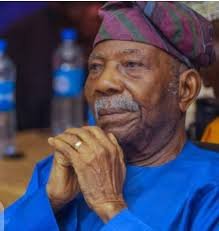




A faction of the pan-Yoruba socio-political organisation, Afenifere, led by Oba Oladipo Olaitan, has demanded a reduction in petrol prices to between N350 and N400 per litre and an increase in the N70,000 national minimum wage.
The group said the Federal Government’s proposed petrol price stabilisation mechanism would not provide sufficient relief for Nigerians struggling with rising living costs.
The demands were contained in a communiqué issued on Sunday after Afenifere’s monthly National Executive Committee meeting held in Lagos at the weekend.




The communiqué was signed by Olaitan and the organisation’s newly appointed substantive Secretary-General, Alade Rotimi-John.
“The meeting proposed an immediate review of the fuel price to between N350–N400 per litre so as to ease the general situation regarding the unaffordability of the product,” the group stated.
The demand follows the Federal Government’s announcement that it is negotiating a N1,350-per-litre ceiling on the ex-gantry or landing cost of petrol to reduce the impact of fluctuations in global oil prices and exchange rates.
Finance Minister Taiwo Oyedele announced the proposed price-modulation mechanism on October 8, explaining that refiners and importers would temporarily absorb costs above the agreed ceiling and recover the difference when market conditions improve.
The government has maintained that the arrangement is intended to moderate price fluctuations rather than restore the fuel subsidy abolished in May 2023.

The proposed ceiling also applies to the ex-gantry or landing cost of petrol, meaning it does not automatically guarantee that the product will sell for N1,350 per litre at filling stations.
The government has also announced a 30-day arrangement under which NNPC Retail will forgo its retail profit margin and sell petrol at cost, with priority given to public transport operators.
Afenifere, however, said the measures remained insufficient to address the economic difficulties facing households.
The group described hardship, hunger and high inflation as defining features of President Bola Tinubu’s administration, accusing the government of failing to adequately address citizens’ welfare, public safety and security.
“The meeting reviewed the general socio-political and economic situation of the country and observed that a pervasive climate of hardship, hunger and hyperinflation is yet the defining characteristic of the Tinubu presidency,” the communiqué stated.
On workers’ welfare, the organisation argued that inflation had eroded the purchasing power of the N70,000 national minimum wage and called for an upward review.
“The statutory minimum wage of N70,000 per month is due for an upward review so as to meet the challenges of the inflationary spiral which have rendered the minimum wage unreasonable and unfeeling in the present circumstances,” it said.
Nigeria’s minimum wage was raised to N70,000 in 2024 following negotiations involving the Federal Government and organised labour.
Afenifere also expressed concern about political intolerance ahead of the 2027 general elections, warning that inflammatory statements by politicians could increase tensions and narrow the space for democratic participation.
The group called on political actors to conduct their campaigns peacefully and responsibly.
It also urged the Federal Government to guarantee credible elections in 2027 by allowing the Independent National Electoral Commission to operate independently.
“The meeting challenged the government to ensure a free and fair 2027 general election by allowing INEC to be truly independent,” the communiqué added.
At the meeting, Afenifere confirmed Alade Rotimi-John’s appointment as its substantive Secretary-General.
Other attendees included Omo-Oba Supo Shonibare, former Lagos State Deputy Governor Kofo Bucknor-Akerele, Tola Mobolurin, Bayo Adenekan, Justice Faloye, Dele Farotimi, Toyin Falade, Lanre Anjolaiya, Olayemi Olajuyinnu and Wale Balogun.
The organisation also condoled with Leke Adefala over the death of his wife and resolved to attend the funeral ceremonies.
Afenifere’s demands add to the debate over how the Federal Government can reduce fuel-price pressures and improve workers’ purchasing power while maintaining its economic reform programme.