




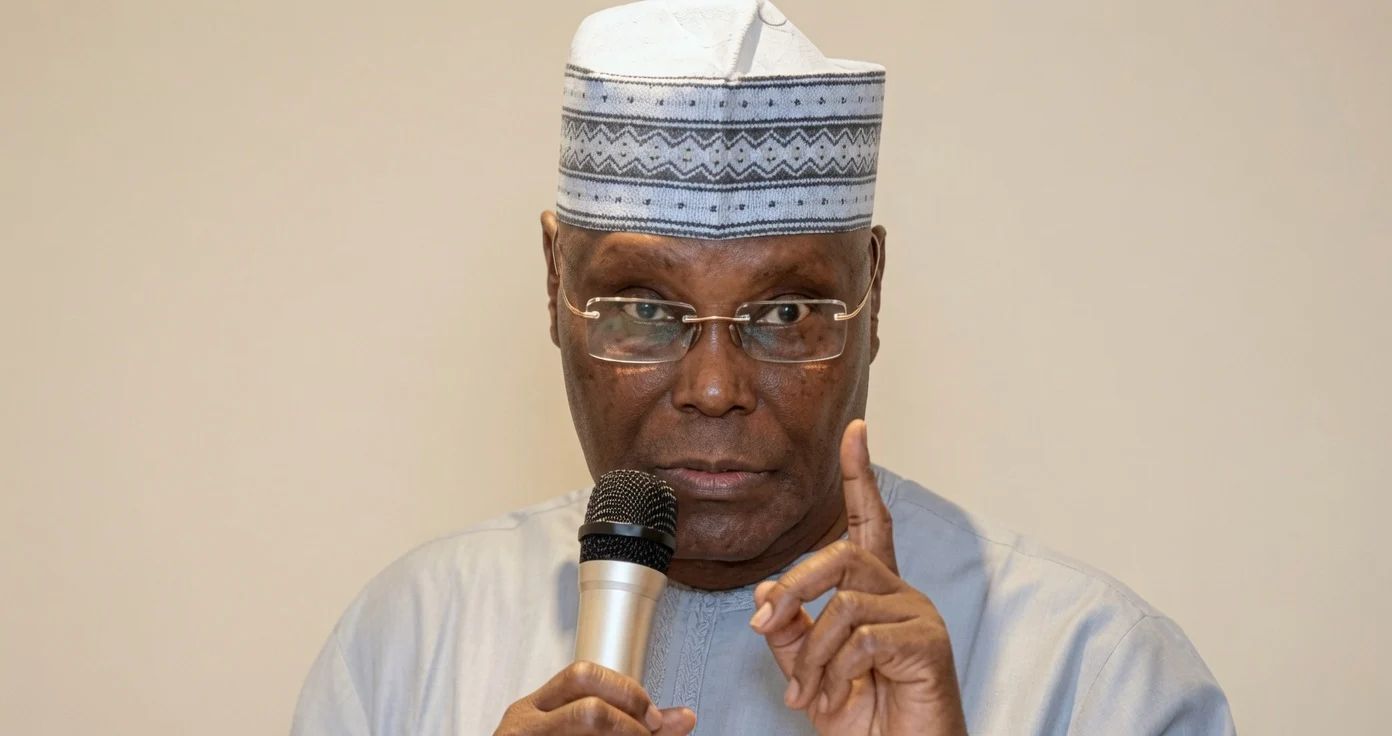
Former Vice President and African Democratic Congress (ADC) presidential candidate, Atiku Abubakar, has launched a fresh attack on the administration of President Bola Tinubu, accusing it of using “creative accounting” and “lying with statistics” to paint an inaccurate picture of Nigeria’s economy amid worsening hardship.
In a statement issued on Sunday by his Senior Special Assistant on Public Communication, Phrank Shaibu, Atiku rejected recent comments defending the Federal Government’s economic reforms, including the removal of fuel subsidy, debt management strategy and workers’ welfare initiatives.
According to Atiku, no amount of statistical presentation can conceal what he described as the deteriorating living conditions of ordinary Nigerians.




He argued that the government’s claim that savings from fuel subsidy removal are being used to reduce inherited liabilities is inconsistent with publicly available financial records, alleging that the Federal Government’s exposure to the Central Bank of Nigeria has increased rather than declined.
Atiku also disputed claims that workers have fully benefited from the new wage package, insisting that outstanding allowances and wage awards remain unpaid.
He further questioned the government’s position on the funding of the Nigerian Education Loan Fund (NELFUND), citing previous statements that part of its funding came from recovered assets.
The former vice president criticised the administration’s monetary policies, arguing that higher interest rates have increased borrowing costs for businesses while worsening debt-servicing obligations.

He maintained that soaring food prices, inflation, unemployment, exchange-rate depreciation and declining purchasing power remain the realities confronting millions of Nigerians.
The latest criticism comes amid continued debate over the impact of the Tinubu administration’s economic reforms, including the removal of petrol subsidy and the liberalisation of the foreign exchange market.
While the Federal Government maintains that the reforms are laying the foundation for long-term economic stability, critics argue that they have intensified the country’s cost-of-living crisis.