


The Ibadan Circular Road has become more than an infrastructure project in Oyo State. It has emerged as a political flashpoint, with competing narratives within the All Progressives Congress (APC) over the project’s ownership, execution, cost and impact.
The latest controversy follows the Federal Government’s inclusion of the Circular Road in an advertorial highlighting development projects, while Oyo State Governor Seyi Makinde has objected to the federal government’s presentation of the project.

Makinde said the 110-kilometre road was being constructed by the Oyo State Government and accused the Federal Government of taking credit for a project in which, according to him, it had no involvement.
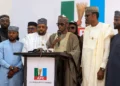


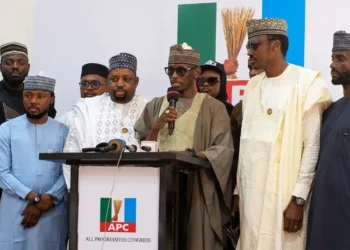
The controversy becomes more politically significant because the APC’s 2027 governorship candidate in Oyo State, Senator Sharafadeen Alli, has also made the Circular Road a major subject of criticism.
Rather than presenting the project simply as an infrastructure achievement, Alli has focused on the grievances surrounding it, particularly those of residents affected by the road corridor. At a recent political dialogue in Ibadan, he promised to establish a committee within 48 to 72 hours of assuming office to address the grievances of affected residents and said his administration would not seize people’s land.
The resulting political picture is striking: while federal authorities have presented the road as part of a development narrative, the APC’s Oyo governorship candidate has chosen to campaign on the controversies surrounding the same project.
Yet the history of the Circular Road does not begin with the present administration.
The project dates back to the administration of former Governor Rashidi Ladoja, which carried out the initial right-of-way survey in 2005. The corridor was subsequently expanded under former Governor Abiola Ajimobi in 2017 as part of the revised Ibadan Master Plan. Ajimobi’s administration also awarded a 32-kilometre section to ENL Consortium for N67 billion.
When Makinde assumed office in 2019, the project was still incomplete. His administration later reviewed the existing arrangement and, in July 2021, awarded the 110-kilometre project to the SEL-Vydra Consortium for N138.2 billion under a Build, Operate and Transfer arrangement.
The state’s procurement records confirm the July 2021 award. Contemporary details of the concession showed an 80:20 financing and equity structure between the consortium and the state government.
That history matters because political arguments over the road can easily obscure the distinction between conception, land acquisition, earlier construction and the subsequent re-award and implementation.
It is therefore inaccurate to reduce the Circular Road’s history to the work of one administration alone. At the same time, the current construction phase and the 2021 re-award clearly belong to the Makinde administration.
The project has also generated legitimate questions beyond partisan politics. In 2026, the Oyo State Government approved another N5.8 billion in compensation for affected property owners, with more than 900 people reportedly included in a re-verification exercise.
Makinde himself acknowledged in his 2026 budget presentation that residents affected by the project deserved attention, saying the government remained committed to compensation and exploring resettlement options.
That is where the political debate should properly lie.
The Circular Road can simultaneously represent a major infrastructure intervention and generate legitimate questions about financing, compensation, implementation and the treatment of affected communities. Recognising one does not require denying the other.
The more revealing question, therefore, is why the project has become such a powerful political instrument.
For the Makinde administration, it represents a central component of its infrastructure record. For the APC and its candidate, the controversies surrounding the road provide an opportunity to challenge that record. And for the Federal Government, its appearance in a national development narrative has triggered a dispute over who deserves credit.
That contradiction has turned the Circular Road into a political battleground.
The road’s history also demonstrates why infrastructure should not be reduced to campaign slogans. Ladoja initiated important groundwork. Ajimobi expanded the corridor and awarded an initial section. Makinde’s administration subsequently restructured the project and awarded the full 110-kilometre concession. Each phase forms part of the project’s history.
The political contest should therefore be about measurable outcomes: how much has been completed, how much has been spent, how affected property owners have been treated, what economic benefits the road is generating and whether the final infrastructure delivers the promised connectivity.
The Circular Road was designed to move Ibadan forward. Its political significance should not prevent Nigerians from asking those straightforward questions.
Dr Sulaimon Olanrewaju is the Special Adviser (Media) to the Governor of Oyo State.
October 3, 2026