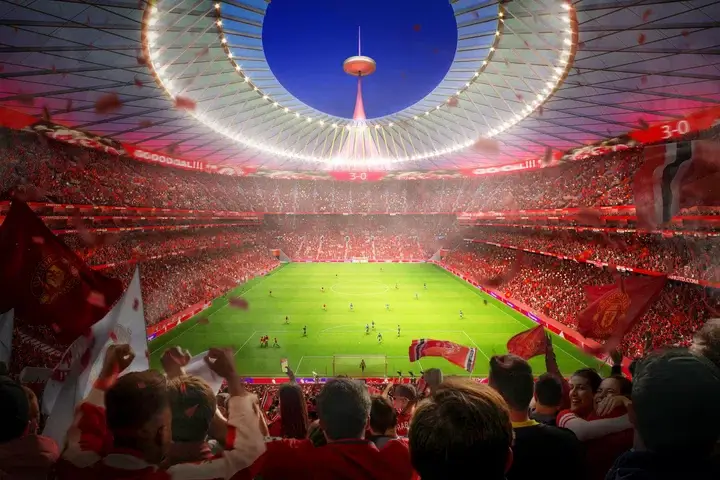
Manchester United has moved a step closer to building what could become the largest football stadium in the United Kingdom after securing a major parcel of land required for its proposed 100,000-capacity arena near Old Trafford.
The Premier League giants announced on Monday that they had acquired a 25-acre site approximately 350 metres north-west of the current Old Trafford stadium, a development club executives described as a critical milestone in plans to create a world-class sporting and entertainment destination.
The proposed stadium project forms part of a broader regeneration initiative covering around 370 acres of land in the Old Trafford area, one of the most ambitious urban redevelopment plans currently being considered in the UK.




According to the club, the new venue would become the country’s largest sporting arena, surpassing Wembley Stadium and reinforcing Manchester United’s long-term ambition to modernise its infrastructure while maintaining ties to its historic home.
Speaking on the development, Collette Roche, CEO of Manchester United’s New Stadium Development project, said the acquisition represents significant progress toward delivering a new home for the club.

“Today’s news highlights the progress we’re making towards a world-class new home for Manchester United and represents a significant milestone as we move into the next phase of development,” Roche said.
She stressed that locating the new stadium close to Old Trafford would help preserve traditions that supporters have built around matchdays for generations.
Manchester United also pledged to engage directly with businesses and residents likely to be affected by the redevelopment, promising support measures during the transition period.
Beyond football, the club believes the project could have a transformative economic impact on the region. Estimates released by the club indicate that the wider regeneration programme could deliver approximately 15,000 new homes, create 48,000 jobs locally and more than 90,000 jobs nationwide, while contributing over £7 billion annually to the UK economy.
The announcement generated immediate reactions across social media, reflecting both excitement and concern among supporters.
Many fans welcomed the development as evidence of the club’s ambition to restore its standing on and off the pitch after several challenging seasons.
Others questioned whether resources should be focused on football operations before embarking on a major infrastructure project, while some expressed sadness at the prospect of eventually moving away from the historic Old Trafford.
Manchester United has spent years examining options to either redevelop Old Trafford or construct an entirely new stadium. Aging infrastructure, rising maintenance costs and increasing competition from newer venues across Europe have intensified discussions about the future of the club’s home ground.
Although a final construction timeline has yet to be announced, the land acquisition marks one of the most significant steps in the club’s stadium plans and signals that preparations are entering a more advanced stage.