Nigeria has recorded at least 10 military aircraft crashes between 2021 and October 2026, with 68 confirmed or presumed deaths, amid fresh calls for a comprehensive review of military aviation safety systems.
The incidents involved fighter jets, helicopters, training aircraft, transport aircraft and unmanned aerial vehicles, and occurred during combat operations, training exercises, routine missions, casualty evacuation and post-maintenance flights.
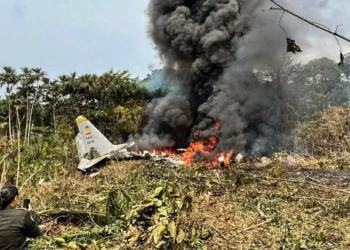
The latest and deadliest incident in the period occurred on October 5, when a Nigerian Air Force ATR-42 aircraft, NAF 931, crashed in the Igbokoda area of Ilaje Local Government Area, Ondo State, while travelling from Benin City to Lagos.



Air traffic controllers lost contact with the aircraft at about 9:13am.
Although initial information from government officials put the number of people aboard at 32, the Nigerian Air Force subsequently reviewed the manifest and confirmed that 25 people — five crew members and 20 passengers — were on board.
There were no survivors.
President Bola Tinubu ordered an investigation into the cause of the accident and declared three days of national mourning for the victims. The Defence Headquarters also directed a probe to establish the circumstances surrounding the crash.
The incident has renewed scrutiny of the safety of Nigeria’s military aviation fleet, particularly aircraft maintenance, airworthiness, operational procedures and accident investigation.
Aviation analyst and member of the Aviation Round Table, Olumide Ohunayo, said the frequency of military aircraft accidents showed the Air Force needed to urgently review its safety systems.
Ohunayo said estimates of military aviation accidents varied, but argued that even the lower figures represented a serious concern.
“Let’s take the least, which is 16 compared to commercial aviation. That shows there’s a problem that the Air Force needs to attend to,” he said.
He called for stronger cooperation between the Nigerian Air Force, the Nigerian Civil Aviation Authority and the Nigerian Safety Investigation Bureau.
“We are losing assets, losing personnel, and we are also losing confidence in some of the operations of the Air Force. There’s a need for the Air Force to come together to accept that there’s a problem with safety and operational systems in place,” Ohunayo said.
He also urged the Air Force to review its operational manuals, procedures and processes, while involving aviation regulators, accident investigators and other professionals.
The concern follows several military aviation incidents recorded since 2021.
In February 2021, a NAF Beechcraft King Air 350i crashed shortly after take-off from Abuja while heading towards Minna, killing seven personnel.
In March, an Alpha Jet conducting operations in Borno State disappeared from radar, with its two pilots later presumed dead. In May, another King Air 350 crashed near Kaduna International Airport, killing 11 people, including the then Chief of Army Staff, Lt Gen Ibrahim Attahiru.
Another Alpha Jet was lost in Zamfara in July 2021 after it was shot down, although its pilot survived after ejecting.

In April 2022, a Super Mushshak trainer crashed in Kaduna, killing its two pilots.
The Air Force recorded further incidents in 2023, including an FT-7NI trainer crash in Makurdi, in which both pilots survived, and the crash of an Mi-171 helicopter during a casualty evacuation mission in Niger State.
An Mi-35P helicopter also crash-landed shortly after take-off from the NAF Base in Port Harcourt in December 2023. Its five crew members survived.
Subsequent incidents included a 2025 Alpha Jet emergency during a post-inspection functional check flight and the loss of a CH-4B unmanned aircraft during a surveillance operation in 2026.
The circumstances surrounding the incidents have varied, meaning the figures do not establish a single cause for military aircraft accidents. The cause of the latest ATR-42 crash remains subject to investigation.
The debate has nevertheless intensified over whether civilian aviation safety institutions should play a greater role in military aviation safety.
Ohunayo has called for urgent audits of military and paramilitary aviation operations and greater involvement of the NSIB in reviewing past accidents and assisting with investigations.
Another aviation expert, Group Capt. John Ojikutu, also argued that the wider security responsibilities assigned to the military should form part of the safety review, given the increasing use of military aircraft for counter-insurgency, surveillance, logistics and casualty evacuation.
The Igbokoda crash has added urgency to those calls, with the difficult swamp terrain also complicating recovery operations.
The emerging question is no longer limited to individual aircraft or accidents but whether Nigeria’s military aviation system needs a broader safety audit covering maintenance, airworthiness, operational demands, training, oversight and lessons from previous incidents.