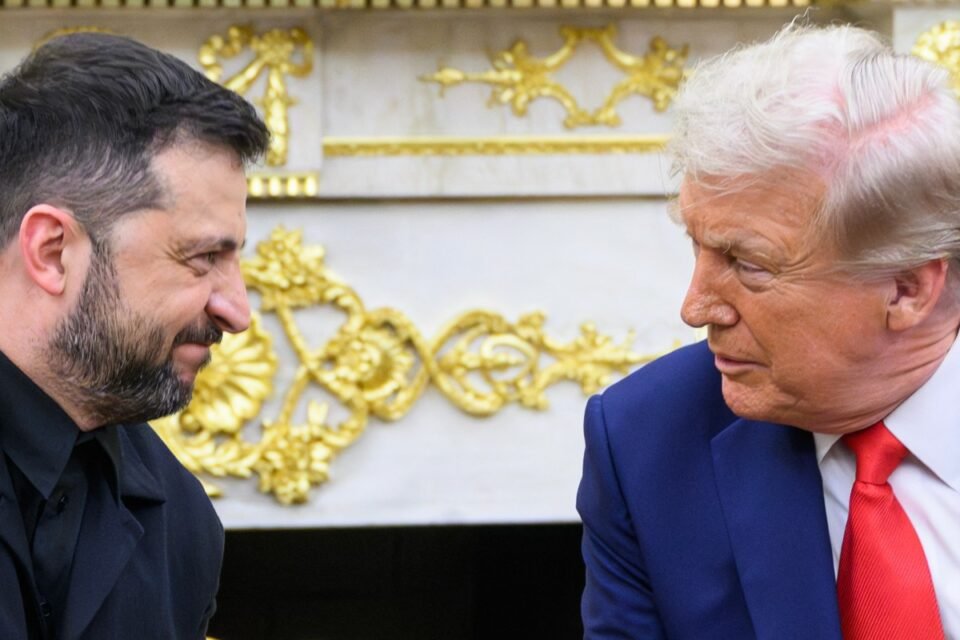
US President Donald Trump has called for Ukraine to elect a new president, accusing Volodymyr Zelenskyy of failing to negotiate an end to the war with Russia and blaming Ukrainian attacks on Russian energy infrastructure for contributing to rising diesel prices in the United States.
Trump made the remarks at the White House on Saturday, October 10, a day after announcing an agreement with Russian President Vladimir Putin to increase diesel supplies to American and global markets amid soaring fuel prices ahead of the November midterm elections.
“I suggest they get a new leader who can make a deal because he could have made many deals and for some reason he never does,” Trump said.




The US president also accused Zelenskyy of worsening global economic pressures by continuing attacks on Russian energy infrastructure.
Trump argued that the strikes were affecting American farmers and ranchers through higher diesel prices, adding that Ukraine’s leadership needed to change its approach to ending the conflict.
“He wants to make problems for the world. He wants to make problems for our farmers, our ranchers, with diesel fuel,” he said.
Trump further claimed that the war would not have started if he had been president in 2022, when Russia launched its full-scale invasion of Ukraine.
He described the conflict as unnecessary and blamed what he called incompetence for its outbreak, arguing that Zelenskyy had failed to reach an agreement with Moscow.
The US president also claimed that Ukraine had lost 30 per cent of its territory and that more than two million people had been killed in the conflict.
However, independent estimates put the proportion of Ukrainian territory under Russian control at approximately 20 per cent, while comprehensive, independently verified figures for total military and civilian deaths remain unavailable.
Russian diesel deal fuels dispute
Trump’s criticism followed his announcement on Friday that Russia would supply more than 300,000 tonnes of diesel immediately, followed by 500,000 tonnes in November and another one million tonnes thereafter.
He also announced plans for an additional three million tonnes to be delivered within a short period, subject to the condition of Russia’s diesel refineries.
The US Treasury Department subsequently issued a temporary licence permitting Russian diesel exports to the global market, easing restrictions previously imposed on Moscow over its invasion of Ukraine.
The agreement is intended to increase fuel supplies and help reduce pressure on prices as the United States approaches its November midterm elections.

However, the decision has drawn criticism from Ukraine, which argues that allowing Russia to expand its energy exports could provide Moscow with additional revenue to sustain its military operations.
Zelenskyy condemned the agreement, warning that Russia could interpret the easing of sanctions as an opportunity to continue its attacks on Ukrainian cities and critical infrastructure.
The Ukrainian president has maintained that pressure on Moscow should not be relaxed without meaningful progress towards ending the war.
Russian strikes kill 20 in Ukraine
The diplomatic dispute intensified as Russian attacks killed at least 20 people, including three children, in Ukraine’s southeastern Zaporizhzhia region on Saturday.
Ukraine’s State Emergency Service said aerial bombs struck residential buildings, leaving at least 18 people wounded.
Rescue workers continued operations at the affected sites as authorities assessed the damage and assisted survivors.
Zelenskyy condemned the strikes and criticised Washington’s decision to ease restrictions on Russian diesel exports, arguing that Moscow was benefiting from additional economic opportunities while continuing its military campaign.
The latest developments have exposed competing priorities between Trump’s efforts to ease American fuel costs and Ukraine’s demand for continued economic pressure on Russia.
Trump’s call for Zelenskyy to be replaced has added another layer of tension to relations between Washington and Kyiv, as disagreements over energy supplies, military strategy and the terms of a potential peace agreement continue.