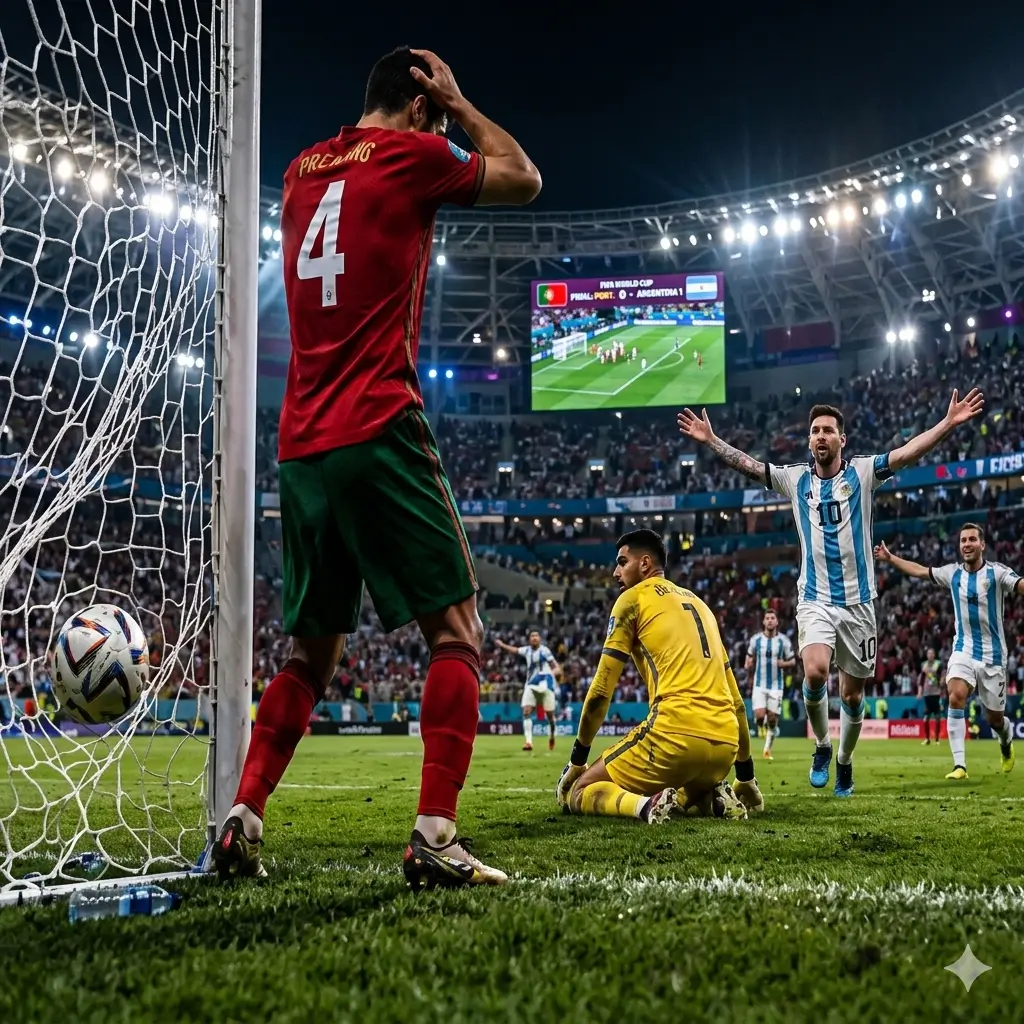
The 2026 FIFA World Cup is rapidly approaching an unwanted record after eight own goals were recorded within the opening 10 days of the tournament, raising the possibility that the expanded competition could surpass the all-time World Cup mark before the knockout rounds are completed.
The latest own goal came on Sunday when Saudi Arabia defender Hassan Altambakti inadvertently turned the ball into his own net during his side’s 4-0 defeat to Spain, becoming the eighth player to score an own goal at this year’s finals.

With FIFA’s expanded 48-team format featuring 104 matches across the United States, Canada and Mexico, football statisticians believe the tournament is on course to challenge, and potentially eclipse, the record of 12 own goals set during the 2018 World Cup in Russia.



The growing list of unfortunate scorers has become one of the most unusual storylines of the competition.
Paraguay’s Damián Bobadilla opened the trend when he accidentally put the ball past his own goalkeeper in a match against co-hosts United States. Australia’s Cameron Burgess later joined the list, also scoring an own goal against the Americans.
Switzerland defender Miro Muheim, Qatar’s Mohamed Manai, Egypt’s Mohamed Hany, Iraq’s Aymen Hussein and Jordan’s Yazan Al-Arab have also found themselves on the wrong side of World Cup history.
Hussein’s case stands out. The Iraqi striker not only scored an own goal against Norway but also found the net for his country in the same match, becoming just the third player in World Cup history to score for both teams during a single game.
The United States have emerged as the biggest beneficiaries of the trend so far. The two own goals scored in their favour have already equalled the World Cup record for the most own goals benefiting a single team during one tournament.
According to tournament data, there have now been 61 own goals in FIFA World Cup history, with the eight scored at the 2026 edition accounting for nearly 13 per cent of that total.
The phenomenon has sparked debate among analysts, some of whom believe the expanded format, increased number of matches and tactical pressure placed on defenders may be contributing to the surge.
Historically, own goals have remained relatively rare on football’s biggest stage. The first was recorded during the inaugural World Cup in 1930 when Mexico’s Manuel Rosas accidentally scored against Chile. Several editions of the tournament, including Italy 1990, ended without a single own goal being registered.
Mexico holds the record for the most own goals scored by one nation in World Cup history with four, while France has benefited the most from opponents’ mistakes, receiving six own goals in its favour.
With the group stage still unfolding and dozens of matches left to be played, the 2026 World Cup appears increasingly likely to establish a new benchmark for one of football’s most painful statistics.