The death toll from the catastrophic flash floods that devastated the Himalayan border region between Nepal and Tibet has surged to 797, with search-and-rescue teams battling extreme terrain and fresh flood warnings to locate nearly 3,000 people who remain missing.
Updates released on Sunday by Nepal’s National Disaster Risk Reduction and Management Authority confirm that search crews have recovered 781 bodies across affected districts, while 2,502 individuals remain missing. On the other side of the border, Chinese state media reported 16 confirmed deaths and 546 missing persons in the Tibet autonomous region.
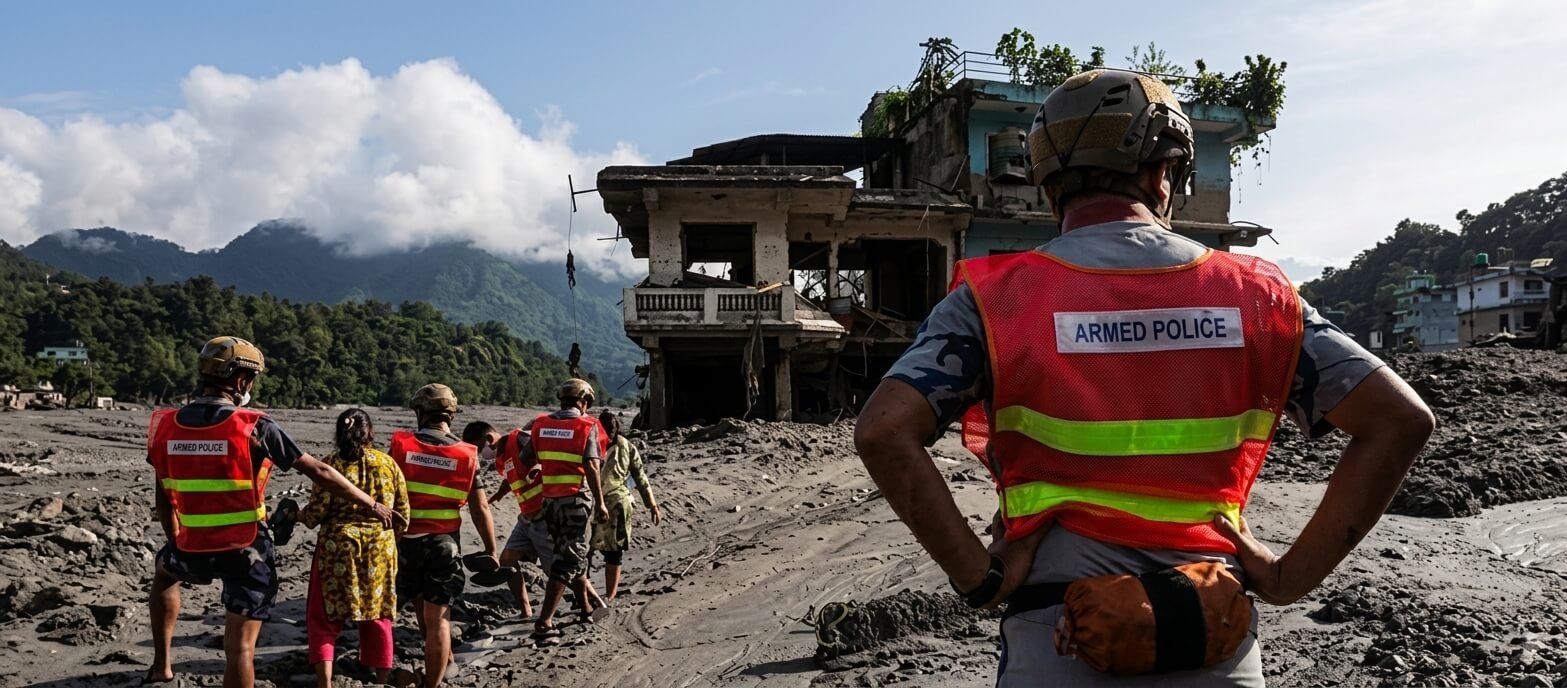
The disaster struck without warning on Wednesday morning when a cliff-side glacier collapsed at an altitude of 16,000 feet. The resulting massive debris avalanche slid thousands of feet down the mountain slope, generating a magnitude 5.2 seismic impact. The sudden collapse sent a wall of mud, boulders, and glacial meltwater racing into the Bhotekoshi and Trishuli rivers, tearing through towns, bridges, and highways over a 62-mile path of destruction.



Geoscientists monitoring satellite data confirmed that a substantial lower section of the mountain glacier detached entirely, unleashing the deluge.
Emergency rescue operations are currently concentrated on freeing more than 100 workers trapped inside underground tunnels at major hydroelectric projects, including the Trishuli 3A and 3B power sites. Ground crews are working under perilous conditions, encountering up to five feet of thick, quicksand-like mud and limited helicopter landing zones.
Nepal’s Energy Minister, Biraj Bhakta Shrestha, clarified that rescue efforts are active across multiple underground points rather than a single site. At the Trishuli 3A facility, emergency crews successfully drilled through thick mud barriers to pump oxygen into the shafts while deploying specialized cameras to search for signs of life.
The international response has intensified as the search enters its critical phase. Specialized tunnel-rescue units from India, alongside elite Nepali mountain rescue teams seasoned on Mount Everest, have deployed to the worst-hit zones, with additional units arriving from China.

The U.S. State Department announced $3.6 million in emergency humanitarian aid to support food distribution for affected families, noting that dozens of foreign nationals—including over 80 Americans in the region for work, trekking, or pilgrimage—remain unaccounted for.
Nepalese Foreign Minister Shisir Khanal stressed that locating missing citizens and international visitors remains the country’s top priority. The government has requested urgent international support, including advanced survivor-detection technology, forensic DNA analysis units, and temporary morgue refrigeration. More than 57 metric tonnes of relief supplies have already arrived from India, alongside contributions from Japan, Australia, and global relief agencies.
Meanwhile, trauma and uncertainty hang over survivor communities. Outside major hospitals in Kathmandu and field centers near Nuwakot, crowds of desperate relatives line up to scan notice boards, post photos of missing loved ones, and check identification records of recovered victims.
The Red Cross estimates that nearly 90,000 people have been displaced or directly impacted by the disaster. With authorities issuing fresh alerts regarding rising river levels and potential secondary lake overflows high in the mountains, rescue teams remain on high alert across the disaster zone.