


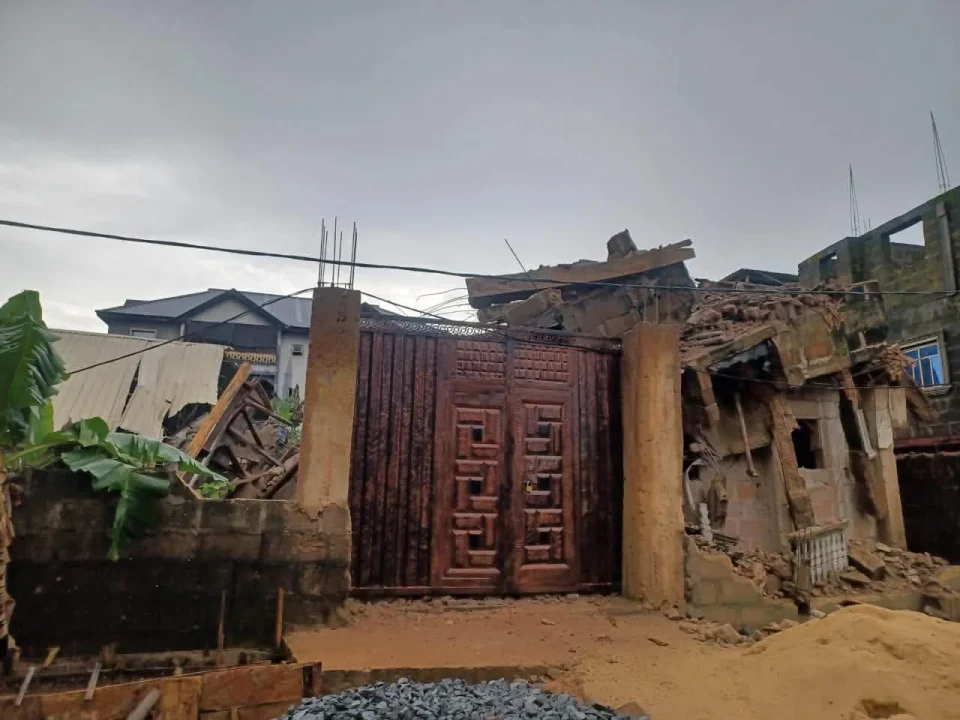
A woman and her 14-year-old daughter have died after a three-storey building under construction collapsed onto a neighbouring residential structure in Okpoko, Ogbaru Local Government Area of Anambra State.
The incident occurred on Thursday, October 8, at Emeka Ugwuanyi Street in the Anata Anaba area of Okpoko, amid heavy rainfall.
The victims were identified as Mrs Happiness Ugoagu and her daughter, Confidence, who were reportedly asleep when the building collapsed onto their accommodation.



The tragedy has raised fresh concerns about construction safety, regulatory enforcement and the dangers posed by buildings erected without the necessary approvals.
Residents said they had previously expressed concerns about the construction, claiming that the waterlogged nature of the land made it unsuitable for a three-storey structure.
According to residents, an engineer who initially handled the project had advised that the building should not exceed two storeys because of the ground conditions.
They alleged that the recommendation was ignored and another engineer was subsequently engaged to continue the project.
The claims have not been independently established as the definitive cause of the collapse.
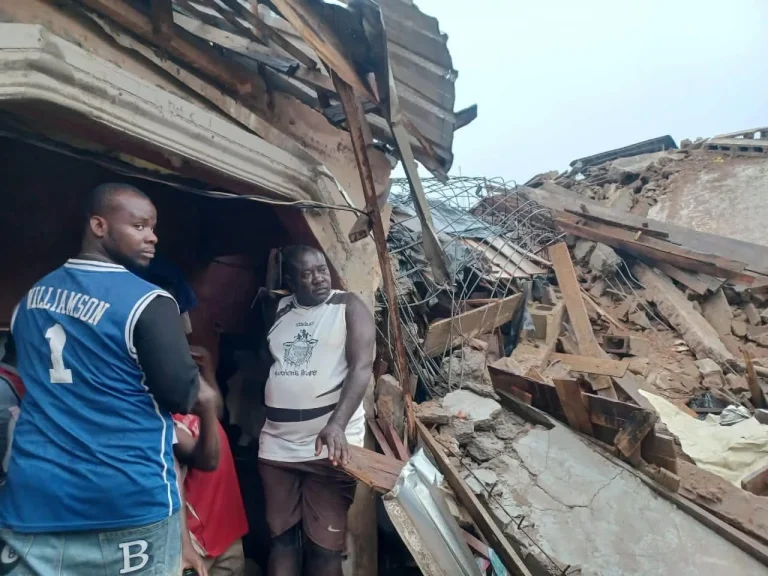
The victims were reportedly inside their apartment when the structure came down. Their deaths have left their family and neighbours mourning, while questions remain about whether the building’s design, foundation and construction complied with applicable standards.
The woman’s son, identified as Chimobi in reports on the incident, said he was outside when the building collapsed, while his mother and sister were inside their bedroom.
He lamented that the family and other residents had previously warned about the potential danger but their concerns were allegedly disregarded.
Emergency responders and residents mobilised to the scene to assist with rescue efforts and remove debris. Other people reportedly trapped in the rubble were rescued and taken to hospital, although a comprehensive official casualty figure was not immediately available.
Anambra government blames construction violations
The Anambra State Commissioner for Physical Planning and Urban Development, Chijioke Ojukwu, described the incident as unfortunate during a visit to the scene alongside Noble Igwe, a member of the state House of Assembly representing Ogbaru One Constituency.
Ojukwu blamed the collapse on substandard building materials and said the authorities had previously issued a stop-work notice on the structure.

He described the building as illegal and said the government had ordered its demolition before the collapse.
“The structure was an illegal building and we had ordered its demolition and the land is going to be forfeited to the state government,” the commissioner said.
He added that the government was investigating other unapproved buildings under construction in the area.
The commissioner’s comments have raised questions about enforcement procedures, particularly how construction reportedly subject to a stop-work notice continued and what action was taken before the tragedy.
The precise sequence of regulatory notices, the status of the demolition order and the technical cause of the collapse require further official clarification.
Another building collapse in Lagos
The incident adds to a series of building-related disasters reported across Nigeria.
On September 10, one person died and two others were rescued after a two-storey building undergoing manual demolition collapsed at No. 42 Governors Road, Aboru, in the Alimosho area of Lagos State.
The Lagos State Emergency Management Agency said its Alpha Eagle Response Team was dispatched following a distress call.
Responders rescued two adult men, while another man was recovered dead.
Although the Lagos incident involved a building undergoing demolition rather than new construction, it highlights the risks associated with unsafe structural work and the need for effective oversight.
In Anambra, attention is now focused on the circumstances surrounding the Okpoko collapse, the enforcement of building regulations and whether further investigations will establish individual or professional responsibility.
The immediate priority remains supporting the bereaved family and ensuring that other potentially unsafe structures in the neighbourhood are identified.