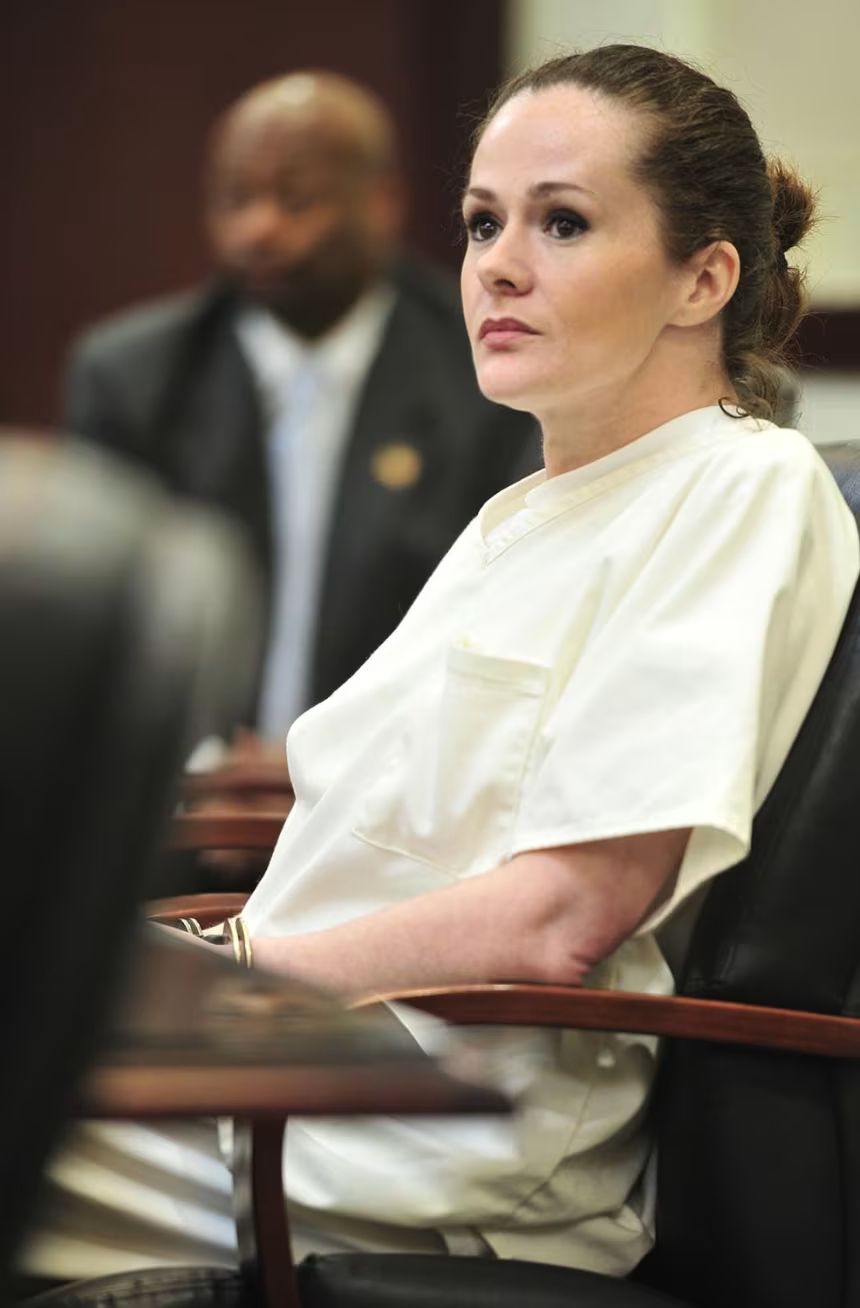
Death row inmate Christa Pike remains critically ill, unconscious and on a ventilator after Tennessee officials failed to execute her by lethal injection.
Pike, 50, was taken to a Nashville-area hospital after the execution attempt at the Riverbend Maximum Security Institution on Wednesday.
Her lawyers, Stephen Ferrell and Luke Ihnen, said Friday that she was being treated for the effects of two doses of pentobarbital administered during the attempted execution.




They said Pike had suffered significant injuries to both arms and remained intubated and dependent on a mechanical ventilator.
Her legal team has filed an emergency motion asking a Davidson County Chancery Court judge to order the Tennessee Department of Correction to preserve evidence relating to the execution attempt.
According to the lawyers, the execution team struggled to establish intravenous access before administering the lethal drug. They allege that improperly positioned IV lines caused pentobarbital to enter surrounding tissue rather than Pike’s bloodstream.
The lawyers said Pike’s arms were swollen, burned and blistered when she arrived at the hospital.
They had previously warned authorities that Pike had medical difficulties that could make intravenous access challenging.
Media witnesses reported that Pike continued showing signs of life after the first dose was administered and that officials subsequently gave her a second dose.
Witnesses also reported hearing her breathing during the procedure.
The Tennessee Department of Correction has defended its actions, saying officials followed every step of the state’s approved execution protocol.
Tennessee Governor Bill Lee has ordered an independent review of the incident and halted the state’s remaining scheduled executions for 2026 while officials investigate why the procedure failed.
The incident is the second botched execution reported in Tennessee this year.
Pike’s lawyers are seeking to have her death sentence commuted, arguing that she suffered severe physical trauma during the failed execution.
The case also raises an unusual legal question because Pike survived after receiving lethal-injection drugs.
Previous failed executions in the United States have generally involved problems establishing intravenous access before lethal drugs could be administered.
In 1947, Louisiana inmate Willie Francis survived an electric-chair execution after a malfunction. The US Supreme Court later rejected his challenge to a second execution, and he was executed the following year.
In 2009, Ohio officials failed to establish an IV line while attempting to execute Romell Broom. The Ohio Supreme Court later ruled that a second attempt would not violate constitutional protections against double jeopardy. Broom, however, was never executed and died in prison in 2020.

Pike was sentenced to death for the 1995 murder of 19-year-old Colleen Slemmer, a fellow Job Corps student. Pike was 18 when she committed the crime and was convicted the following year.
Her scheduled execution would have made her the first woman executed by Tennessee in more than two centuries.
For now, Pike remains hospitalised as her lawyers seek preservation of evidence from the failed execution and pursue further legal remedies.
The state has not announced whether another execution attempt will be scheduled after the independent review.