



The Federal Government has intensified calls for greater African ownership of the continent’s mineral wealth, proposing the establishment of a Lagos-Dakar minerals processing corridor as part of a broader strategy to end the long-standing export of raw minerals and accelerate industrialisation across West Africa.
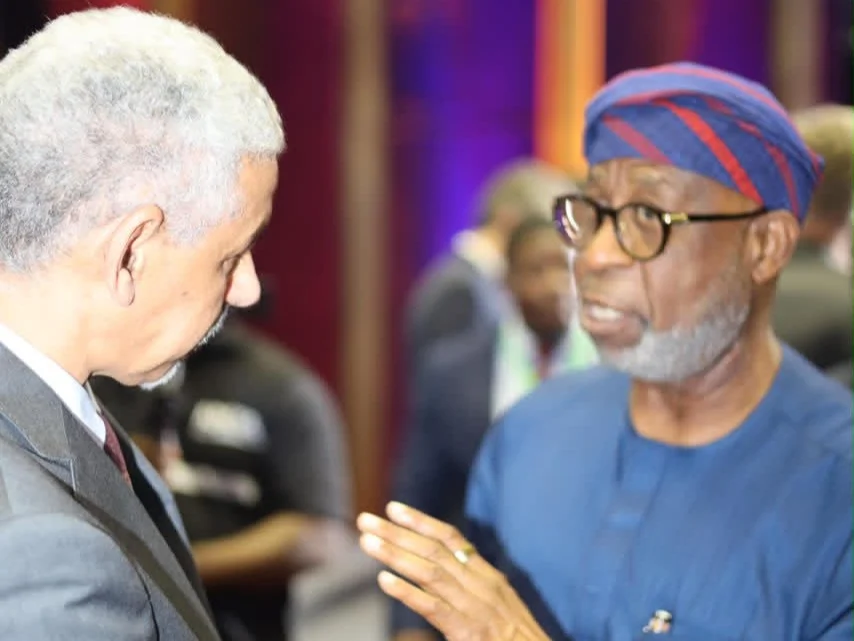
Nigeria’s Minister of Solid Minerals Development, Dele Alake, made the proposal at the Ministerial Forum on Critical Minerals, Value Chain and Beneficiation: Pathways for African Transformation, held in Abidjan, Côte d’Ivoire, under the auspices of the African Development Bank.
Alake said Africa must abandon fragmented national approaches and adopt coordinated regional strategies that allow countries to process, refine and add value to their mineral resources before export.



According to him, the continent has for decades exported raw materials only to import higher-value finished products manufactured elsewhere, a cycle that has limited economic growth, job creation and industrial development.
“While the mantra of value addition has ushered in an era of economic independence for mineral-producing nations, we need concrete, actionable strategies to take charge and be in full control of our natural assets to ensure total economic freedom,” he said.
As chairman of the Africa Mineral Strategy Group, Alake proposed a regional minerals processing corridor stretching from Lagos to Dakar, drawing inspiration from the Lobito Corridor initiative in Southern and Central Africa.
He explained that such a corridor would enable neighbouring countries to specialise in processing different strategic minerals while sharing transport infrastructure, energy facilities, financing and technical expertise. The arrangement, he argued, would lower investment costs, reduce duplication of expensive processing plants and strengthen cross-border trade.
The minister also urged African governments to adopt the Pan-African Resource Reporting Code, saying the continent must gain greater control over the standards used to assess and certify its mineral resources.
Alake added that Nigeria’s proposal aligns with its broader ambition of becoming a regional hub for mineral processing, industrial development and value addition under ongoing reforms in the solid minerals sector.
He also lamented Africa’s low level of intra-African trade, noting that trade within the continent remains far below levels recorded in Asia and Europe. He argued that stronger regional integration is critical to building commercially viable mineral value chains capable of attracting long-term investment.
African Development Bank President Sidi Ould Tah said Africa’s enormous mineral wealth continues to contrast sharply with inadequate financing and investment, urging governments and development partners to work together to unlock the sector’s full economic potential.
The forum concluded with the adoption of the Abidjan Declaration, under which the African Development Bank pledged to expand financing, technical support and investment mobilisation for strategic mining projects, critical infrastructure and regional value chains aimed at creating jobs and boosting industrial development across Africa.