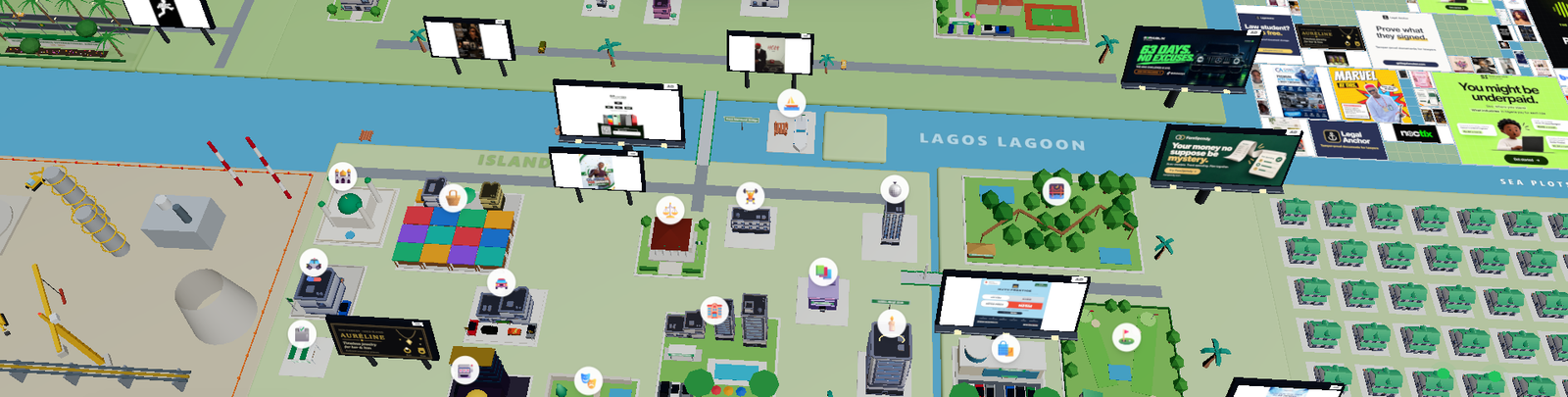
A Nigerian-made browser game that recreates everyday life in Lagos has gone viral, attracting millions of players within days of its launch.
Lagos Life allows players to create characters, find jobs, earn and spend virtual naira, pay rent, socialise and explore a digital version of Lagos alongside other players.
Created by Nigerian developer Shalom Rayhamen, the game was launched on October 1 and quickly became a major talking point on social media.




One of its biggest attractions is accessibility. Lagos Life can be played through a web browser, meaning users do not need to download an application or own a gaming console.
The game’s virtual world mirrors familiar aspects of Lagos life, from jobs and rent to money, entertainment and social relationships.
Players can also find themselves starting from different financial circumstances, including “Nepo” and “Lapo” backgrounds.
“Nepo” plays on the idea of a nepotism baby born into wealth and connections, while “Lapo” references the culture of small loans and financial struggle.
The unusual starting system has helped turn conversations about privilege and economic inequality into part of the game’s entertainment.
Rayhamen has said she drew inspiration from The Sims 3, which she played while growing up, as well as Lagos Run, another Nigerian browser game that allows users to drive a danfo through Lagos traffic.
According to Rayhamen, she built Lagos Life in about eight hours after seeing the attention generated by Lagos Run.
The game was completed in the early hours of October 1 and released later that morning. Within days, it had attracted more than one million players.
Google Trends data cited by WeeTracker showed Nigerian searches for “Lagos life” rising by more than 5,000 per cent in the week after the game’s launch.
The game’s growth has continued at a remarkable pace.
Rayhamen has shared figures showing millions of players and visits, including more than 145,000 people online simultaneously at one point.
She also said the game generated about $46,900 in revenue during its first four days.
The figures were provided by the developer and have not been independently audited.
The game’s revenue comes from a combination of virtual currency purchases and commercial opportunities within its digital world, including advertising and virtual billboard placements.
The rapid growth has also forced Rayhamen to deal with the technical challenges of scaling a game while remaining its principal coder.
She told Zikoko that she plans to leave her job and work full-time on Lagos Life and her other projects.
The virtual world has already expanded beyond Lagos, with Abuja and Port Harcourt added to the game.
Rayhamen has also hinted at plans to expand Lagos Life to other African countries, with further announcements expected in the coming weeks.
The game’s success has demonstrated the potential for Nigerian developers to create digital entertainment around experiences that local audiences immediately recognise.

Instead of an unfamiliar fictional city, Lagos Life puts jobs, rent, money, nightlife, social status and everyday survival at the centre of its gameplay.
And for thousands of players, the result is a virtual Lagos that feels remarkably close to home.