
The Nigeria Police Force has deployed more than 15,000 personnel, 30 Commissioners of Police and a Deputy Inspector-General to Osun State ahead of Saturday’s governorship election, with authorities announcing restrictions on movement across the state.
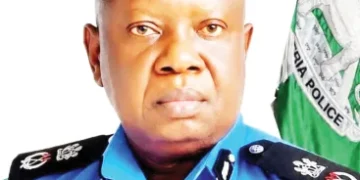
The Force Public Relations Officer, CSP Anietie Iniedu, disclosed the security arrangements in Osogbo as the police intensified preparations for the August 15 poll.
The Independent National Electoral Commission has fixed the election for Saturday, August 15, 2026.




According to Iniedu, the police began deploying personnel about three weeks before the election, while the DIG assigned to the operation will coordinate security activities across the state.
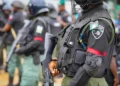
Each of the state’s 30 local government areas will have a Mobile Police Force unit comprising about 60 personnel.
A Commissioner of Police, Deputy Commissioner and other senior officers will also coordinate security operations in each local government area.
Two additional Mobile Police Force units have been deployed to the INEC headquarters in Osogbo.
The police have also deployed a helicopter and drone unit to conduct aerial and area surveillance before, during and immediately after the election.
Iniedu said the Army would cordon off border roads leading into Osun from midnight on Saturday as part of measures to restrict movement.
“We will be locking down the state,” he said, explaining that vehicular movement would be restricted to essential-duty personnel, security officers and voters travelling to cast their ballots.
The police spokesperson warned residents against electoral offences including intimidation, stalking, vote-buying and ballot-box snatching.
He disclosed that about 34 illegal firearms had so far been recovered in Osun, with investigations ongoing.
A mobile court will also be available to handle electoral offences involving arrested suspects.

The heavy security deployment comes amid concerns over alleged voter inducement in parts of the state.
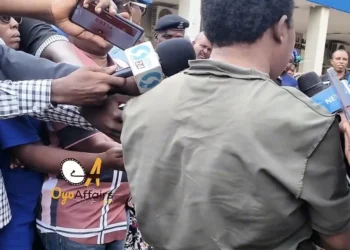
Some residents and traders in Osogbo told journalists that individuals claiming to be party canvassers had distributed cash to voters.
One trader alleged that recipients received N15,000 during an earlier distribution and another N10,000 later.
The claims were not independently linked to any specific political party.
Osun APC spokesperson Kola Olabisi denied that his party was involved in vote-buying, saying the APC had no need to engage in the practice.
Earlier in the campaign, Yiaga Africa had also raised concerns over alleged N10,000 cash transfers to prospective voters in parts of Osun.
The election observer group warned that voter inducement could undermine the credibility of the poll.
There were also reports of the arrest of about 12 suspected hoodlums in Ifewara by Nigerian Navy personnel.
The suspects were reportedly travelling in a vehicle branded in APC colours. However, the APC spokesperson said he had not seen the video circulating online and would respond after examining it.
The Independent National Electoral Commission has urged political parties and candidates to honour the peace accord signed ahead of the election.
The commission said it had conducted security assessments and engaged political parties, traditional institutions, civil society groups and other stakeholders to address concerns over possible violence.
INEC also said non-sensitive election materials had been distributed to local government areas, while sensitive materials would be moved from the Central Bank of Nigeria to local government offices and subsequently to Registration Area Centres.
The commission said its biometric accreditation system had been tested and that backup devices had been increased to more than 1,300.
More than 2.3 million registered voters are expected to participate in the election, with Governor Ademola Adeleke of Accord, APC candidate Bola Oyebamiji and ADC candidate Najeem Salaam among the leading contenders.
The election is expected to be closely watched as the three major contenders battle for control of Osun Government House.
With security personnel now deployed across all 30 LGAs, authorities are seeking to prevent violence, electoral manipulation and other disruptions as voters prepare to cast their ballots.