Owolabi University chief says Nigeria needs more universities to accommodate admission seekers, urges families to take greater responsibility for funding tertiary education.
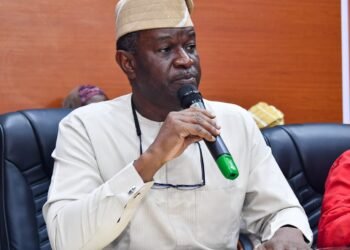
The Vice-Chancellor of Owolabi University, Oke-Ila Orangun, Osun State, Professor Samuel Adedotun, has criticised parents who spend hundreds of thousands of naira on their children’s secondary education but expect them to receive free university education.
Adedotun said the expectation was inconsistent with the need to provide quality tertiary education, arguing that good university education could neither be free nor cheap.


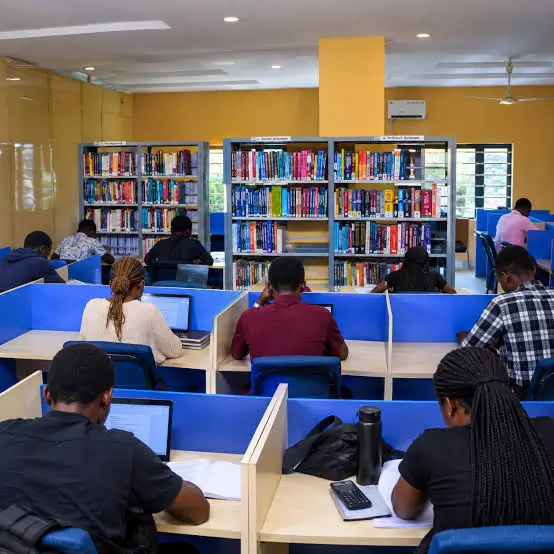
He spoke with journalists at the university’s Osogbo campus on Friday while discussing the challenges of university funding, access to higher education and the need to expand Nigeria’s university system.
The academic administrator said some parents paid as much as ₦500,000 or more per term for secondary school education but expected their children to attend university without paying tuition fees.
According to him, such parents could spend more than ₦1.5m annually on one child’s secondary education, based on the figure he cited, yet expect a different funding arrangement when the child progresses to university.
He said, “Some parents will pay as much as N500,000 or more per term in secondary school. In three terms, they would have paid over N1 million. These parents may have two or three children in secondary school at a time. After secondary school, they will want a free university education for these same children. You cannot get the best out of such a system.”

Adedotun argued that Nigerians needed to reconsider their attitude towards financing education if the country was to provide the resources required for quality teaching and learning.
His comments come against the backdrop of broader concerns about the affordability of education, household income constraints and the financial burden faced by families seeking university admission.
VC seeks more universities
Beyond funding, Adedotun called for the establishment of more universities, arguing that existing public institutions could not accommodate all candidates seeking admission.
He said many candidates who obtained grades considered sufficient for university admission still struggled to secure places because of limited capacity.
“The truth is that we don’t have enough universities,” he said, adding that the ability of parents to afford private university fees was a separate issue from the need to expand admission opportunities.
He also argued that expanding access would require more investment in the country’s higher education system.
Nigeria’s university system includes federal, state and private institutions, but competition for admission remains a major concern for many candidates and their families.
The challenge extends beyond the number of universities to the availability of facilities, qualified lecturers, learning resources and sustainable funding arrangements.
Owolabi University lists 15 programmes
Adedotun said Owolabi University had secured approval for 15 academic programmes across three faculties and invited prospective students and their parents to consider the institution.
The programmes listed in the report include Nursing Science, Physiotherapy, Public Health, Nutrition and Dietetics, and Medical Laboratory Science under Allied Health Sciences.
The university also offers programmes under its Science and Computing and Management and Social Sciences faculties.
Adedotun urged candidates and parents to verify admission requirements and obtain accurate information through the university’s authorised communication channels and admissions office.
He said the institution was committed to providing clear information about its programmes and admission procedures to help prospective students make informed decisions.