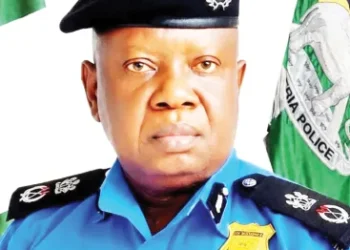

The Inspector-General of Police(IGP), Olatunji Rilwan Disu, has recounted how a retired soldier once asked the police to kill his university-student son after he was arrested for cultism, only to return the following morning carrying food for him.
Disu narrated the incident on Thursday in Abuja while speaking at the National Youth Leadership and Security Dialogue organised by the Nigeria Police Force to commemorate International Youth Day 2026.
The three-day programme, held at the Police Resource Centre, Jabi, is themed “Different Contexts, Common Aspirations” and focuses on youth leadership, security, peacebuilding and responsible citizenship.




The IGP said the incident occurred when he was a divisional police officer in Ago-Iwoye, Ogun State.
According to him, the retired soldier stormed into his office after learning that his son, a university student, had been arrested for cultism.
Rather than plead for his son’s release, the man allegedly demanded that the police kill him.
“He said, DPO, where is the boy? I said, he’s detained. He said, very good. I want you to help me to kill him.
“Kill him! That was what he said. That you must kill him. He doesn’t want him at home,” Disu recounted.
The IGP said the retired soldier remained in his office from morning until almost night, insisting that the police should kill his son.
Disu said he eventually asked the man to return home, assuring him that the police would deal with the matter.
But the following morning, the man’s attitude had changed dramatically.
Disu said the retired soldier called him early and told him he had brought food for his detained son.
The police chief said he deliberately delayed attending to him until later in the day before eventually granting him access to his office.
Recounting his reaction, Disu said: “What if I’ve killed this boy since yesterday? That is a parent for you.”
The IGP’s story was first made public in March 2025, when he was Commissioner of Police in the Federal Capital Territory.
In a reflection titled “The First Lawmakers: My Reflection on Home, Discipline, and Duty,” Disu used the experience to argue that parents must remain central to the upbringing and correction of their children.

He said he later encountered the young man in Sagamu after he had completed his education. The man had married and become a father himself.
Disu said the experience demonstrated the complicated emotions that can accompany parenthood, particularly when parents are confronted with the consequences of their children’s actions.
He also warned against treating police stations as substitutes for homes or rehabilitation centres.
The IGP said parents should report criminal conduct to the police when necessary, but should not expect law enforcement officers to take over the responsibility of raising their children.
The message formed part of a wider appeal by Disu for greater youth and parental responsibility at a time when the police are stepping up engagement with young Nigerians.
At the Abuja dialogue, the IGP also warned political actors against recruiting youths for violence ahead of the 2027 elections.
He urged young Nigerians to reject political thuggery, intimidation and other forms of criminality, stressing that politicians may contest elections but youths would live with the consequences of the violence that follows.
The police’s 2026 youth initiative is designed to promote leadership, innovation, digital responsibility, peaceful civic participation and stronger police-youth engagement.