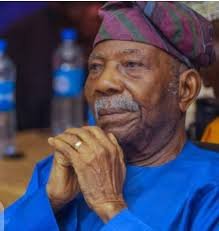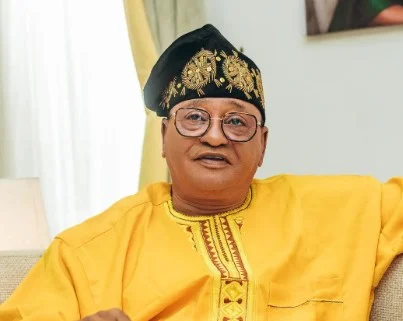
Veteran Nollywood actor Jide Kosoko has defended President Bola Tinubu’s administration amid criticism of Nigeria’s economic situation, arguing that the country’s challenges are not as bad as some Nigerians portray them.
Kosoko made the remarks during an interview on Talk To B, a podcast hosted by actress Biola Adebayo. The interview was published online on Friday, October 16, ahead of wider reports on Saturday.
The actor questioned the circumstances of some Nigerians complaining about hunger, asking what they ate and how they lived before Tinubu assumed office in May 2023.


“When you see people saying, ‘I am hungry, I am hungry,’ go and check the majority of those people saying that before Tinubu came. What were they doing? What were they eating? Every year, things change,” he said.
Kosoko maintained that the country’s economic difficulties should not be assessed solely through the experiences of those who are struggling, arguing that people have different circumstances and opportunities.
“Things are not as bad as some people made us understand,” he said, adding that although some Nigerians were yet to achieve financial stability, their situations could improve.
However, the actor acknowledged that the country was experiencing hardship, insisting that he was not suggesting everything was going well.
“I’m not saying things are rosy,” he said.
Kosoko urged Nigerians to allow Tinubu and his team more time to implement their policies, expressing confidence that the administration could address some of the country’s longstanding problems.
His position reflects his longstanding support for the President and the ruling All Progressives Congress. In the interview, Kosoko also argued that previous administrations had failed to plan adequately for Nigeria’s growing population, leaving the current government to confront problems that had accumulated over the years.
The actor also defended the removal of the petrol subsidy, describing the arrangement as financially unsustainable and arguing that resources previously spent on it could be redirected towards other needs.
He said money Nigerians might otherwise have saved through lower fuel prices would still be needed for expenses such as school fees, business operations and maintaining their surroundings.
Kosoko cited the Nigerian Education Loan Fund, NELFUND, as an example of a government initiative that could reduce the financial burden on parents whose children need support to pursue higher education.

He urged beneficiaries of student-focused government programmes to share their experiences publicly, saying their accounts would help Nigerians assess the impact of the initiatives.
On the rising cost of food, Kosoko argued that Nigerians should also examine the role of traders and sellers in price increases.
“We are enemies of ourselves because when they continue to say, ‘Ah, the price is up,’ then who is hiking it? Who is putting it up? Is it not ourselves?” he asked.
He also suggested that people could manage their food expenses by making practical choices, saying a good meal did not necessarily have to be expensive.
Addressing protests and public criticism, the actor said destructive protests were unacceptable but acknowledged that criticism was necessary to help the government understand where citizens were experiencing difficulties.
Kosoko also dismissed the idea of relocating abroad, saying his family ties and connections to Nigeria remained important to him.
“Even if I am able to japa, don’t I have families, relatives still at home?” he said.
He described Nigeria as a great country and urged citizens to avoid speaking negatively about it.
Kosoko’s comments come amid continuing public debate over the effects of the Tinubu administration’s economic reforms, particularly the removal of the petrol subsidy and the rising cost of living. While supporters argue that the policies are intended to address structural economic problems, many Nigerians continue to raise concerns about food affordability and household expenses.
The actor maintained that Nigerians should give the administration time to complete its work, while also recognising that criticism can help identify problems requiring government attention.