



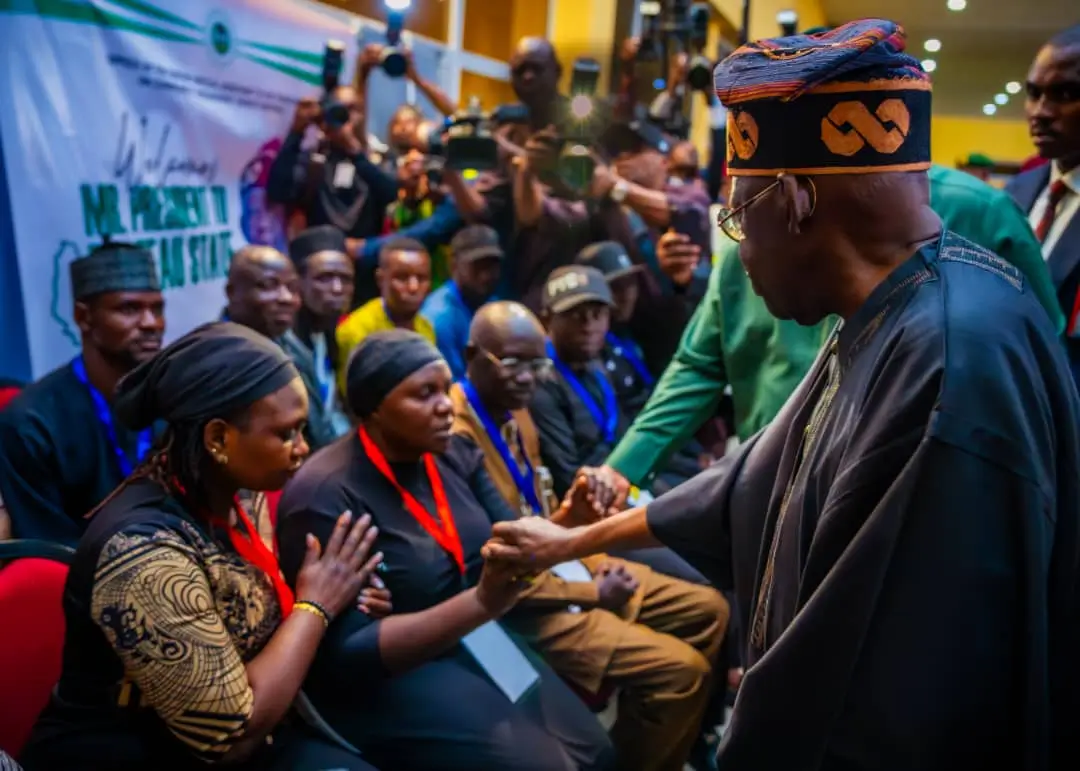
The Presidency on Friday defended President Bola Tinubu’s decision to meet victims of the recent Plateau killings at a hall beside the Yakubu Gowon Airport in Jos, saying operational and flight restrictions made it impossible for him to travel into the city before dusk.
In a statement issued by the President’s Special Adviser on Information and Strategy, Bayo Onanuga, the State House said the arrangement was informed by the airport’s inability to support night flights due to the absence of navigational aids on the runway.
According to the statement, the journey from the airport to Jos township takes about 40 minutes by road, making it difficult for the President to drive to the affected communities, carry out an on-the-spot assessment, and return to the airport in time for departure.
“The runway does not support night flights due to the absence of navigational aids,” the Presidency said, adding that the constraints made the trip into Jos unfeasible.
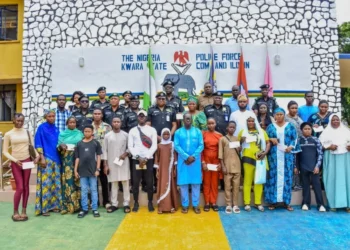
State and federal officials subsequently decided to bring representatives of the affected community to the airport complex so the President could meet them without breaching flight safety requirements.
The explanation comes amid criticism that Tinubu’s condolence visit did not extend beyond the airport following the Palm Sunday killings in Angwan Rukuba, Jos North Local Government Area, where at least 28 people were reported killed in one of the deadliest attacks recorded in the state in recent years.
The Presidency also clarified why the President arrived later than expected in Jos.
According to Onanuga, Tinubu had earlier received Chadian President Mahamat Idriss Déby Itno at the Presidential Villa in Abuja for a bilateral meeting focused on cross-border security cooperation between both countries.
The meeting, the statement said, ran longer than scheduled and affected the President’s departure time for Plateau.
Before the development, Tinubu had initially planned to travel to Iperu in Ogun State. Still, the trip was suspended after Plateau State Governor Caleb Mutfwang briefed him on the scale of the attack and the security situation in the state.
Despite the airport setting, the Presidency insisted the visit was not symbolic.
It said Tinubu met directly with victims, grieving families, community leaders, security chiefs, and political stakeholders to discuss immediate and long-term steps aimed at ending the recurring violence in Plateau.

Among those present were the Minister of Defence, the Chief of Army Staff, and the Inspector-General of Police, all of whom had earlier visited the affected area ahead of the President’s arrival.
During the meeting, the President also addressed Mrs Rhoda, the grieving mother whose emotional video with the body of her son, Ayuba, had gone viral after the attack.
“No amount of money can pay all of you back,” Tinubu told the bereaved families, while assuring them of government support.
He also announced the deployment of over 5,000 AI-enabled surveillance cameras across Plateau State, directed security agencies to track down those behind the killings, and ordered the constitution of a committee to assess losses and recommend compensation for affected families.
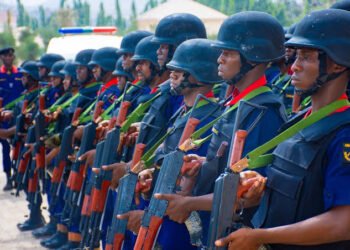
The Nigerian Army separately confirmed the deployment of more than 850 additional troops under Operation Enduring Peace to reinforce security operations in the state.
The Presidency’s explanation follows sharp criticism from former Vice President Atiku Abubakar, who described the visit as insensitive and accused the President of failing to physically reach the grieving communities.